
* All product/brand names, logos, and trademarks are property of their respective owners.
On UK construction sites, flooring is rarely just a finishing detail. It supports heavy plant, protects subfloors during fit-outs, reduces slip hazards in wet conditions, and insulates operatives working near electrical systems. Yet rubber matting is often specified late in the process, with decisions based on cost rather than performance.
For builders, contractors, and site managers, understanding the differences between rubber materials, thicknesses, and installation methods is essential. The wrong specification can lead to premature wear, increased safety risks, and avoidable replacement costs. The right choice, however, improves durability, workforce comfort, and compliance with site safety standards. This guide explores key rubber matting material types used in construction environments, how they perform under real-world conditions, and practical installation advice for achieving reliable long-term results.
Construction sites expose flooring to oil, debris, moisture, vibration, and heavy loads. Rubber matting must be selected according to environmental exposure rather than appearance alone.
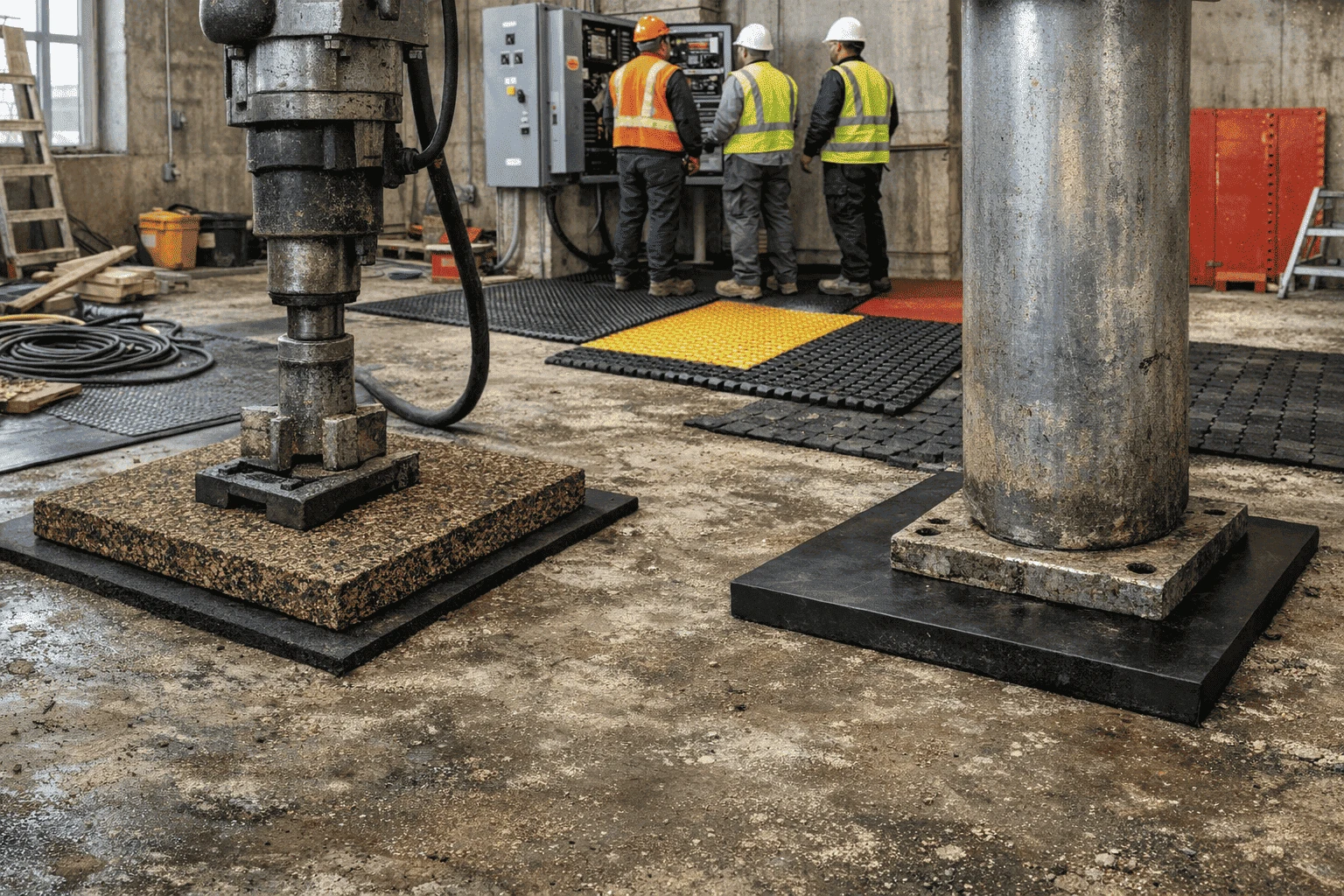
In plant rooms and fabrication areas, it’s essential to use rubber that resists oil and handles compression. Standard rubber can break down when exposed to fuels or lubricants, so nitrile-based compounds are often preferred. Nitrile-bonded cork pads are ideal under machinery, providing both vibration damping and controlled compression for load distribution and sealing. Gasket-style pads like Cnaf C4324 A3–A5 maintain integrity under pressure while resisting fluids. For harsher chemical environments, heavy-duty Viton rubber works well, and shotblast pads protect surfaces from abrasion during preparation. Choosing the right compound ensures durability and long-lasting performance.
Beyond compound selection, thickness significantly affects performance. Thin sheets may suffice for light-duty protection, but machinery bases and rolling equipment demand denser, thicker materials.
Builders should evaluate:
Static load from the installed plant
Dynamic load from vibration or movement
Subfloor condition (concrete, screed, or steel deck)
Under-specifying thickness can lead to compression fatigue and reduced lifespan. Over-specifying may increase cost without added benefit. Careful load assessment ensures the matting performs efficiently without unnecessary expenditure.
Electrical hazards present serious risks on construction and refurbishment projects. Proper insulation underfoot forms part of a broader electrical safety strategy.
Electrical safety matting is categorised by voltage protection class:
Class 0 matting is suitable for lower-voltage applications.
Class 2 matting protects higher-voltage environments.
For example, Rubber Electrical Safety Floor Matting 6mm Thick Class 0 Non Slip may be appropriate in general distribution areas. In higher-risk environments, Class 2 Rubber Electrical Safety Matting 1m Wide Non-Slip provides enhanced insulation capability. Heavier-duty formats such as Electrical Safety Matting 9mm Thick Fine Ribbed Heavy Duty are often specified where foot traffic and mechanical stress are greater.
Electrical safety matting should be installed in:
Front-of-panel operating zones
Switchboards and control cabinets
Generator control areas
Temporary site power stations
Subfloors must be clean and dry, and matting should lie flat without overlapping edges. Proper coverage across the operator’s standing zone is essential to maintain consistent insulation protection.
Site offices, access corridors, and welfare areas experience constant footfall and debris. Products within the industrial mats sector are typically engineered to handle heavy use, including Rubber Mattings, which are designed for demanding commercial and construction applications.
Interlocking systems allow phased installation and easy replacement. The Industrial Anti Slip Floor Mat Interlocking Tuff Tile Textured 7mm Thick provides modular durability suited to workshops or temporary site offices. The Floor Protection Interlocking Modular Mat with Solid Top can shield finished substrates during refurbishment phases, while the Black Plain Rubber Solid Top Interlock Floor Protection Mat – 100% Nitrile offers oil-resistant protection in mechanical zones. Interlocking designs are particularly useful on evolving construction sites where layout adjustments are frequent.
UK weather alone increases slip risk, making surface pattern a key factor in site safety.
Rubber matting with raised or textured patterns can improve traction and provide visual demarcation of walkways. Examples include chequer plate, bubble, diamond, and cellular designs, each suited to different pedestrian or outdoor conditions. Selecting the appropriate surface design helps reduce slip incidents and ensures consistent safety across construction zones.
Extended standing on hard concrete can lead to musculoskeletal strain. Anti-fatigue matting introduces controlled cushioning that encourages subtle movement and improves circulation.
The Yellow Strength Rubber Domed Surface Comfortable Mat combines visible edging with supportive cushioning. For modular workstations, the Interlocking Non-Slip Tuff Tile Anti Fatigue Mat – 14mm Thick allows flexible expansion. In lighter-duty areas, the Anti-Fatigue Standing Desk Foam Ribbed Surface Flooring Mat may be suitable, while the Premium Non Slip Anti Fatigue Ring Rubber Mat With Orange Edge provides durable grip in workshop settings. The Soft Step Wearwell 9mm Anti-Fatigue Mat balances resilience and comfort for consistent bench work.
Thickness, edge visibility, and oil resistance all influence suitability. Overly soft mats compress prematurely; overly rigid mats fail to relieve fatigue. Matching density to usage intensity ensures sustainable performance.
Certain construction environments require electrostatic discharge (ESD) control, particularly where sensitive electronics are installed.
Grey Anti Static Rubber Floor Matting and Anti Static Rubber Floor Mat help reduce static build-up in technical areas such as control rooms or data installations. These solutions support broader grounding strategies within specialist environments.
The Black/Yellow Interlocking Anti-Slip Floor Tiles provide slip resistance alongside high-visibility demarcation. Interlocking tiles enable phased installation and repositioning as project requirements evolve.
Correct installation underpins long-term performance.
Surfaces must be clean, level, and dry. Newly poured concrete should cure fully before bonding permanent systems. Even loose-lay mats benefit from a stable base to prevent movement.
Loose lay suits temporary applications.
Interlocking systems provide stability with flexibility.
Bonded installations are best for permanent heavy-load environments.
Selecting the appropriate method ensures safety and longevity.
Routine cleaning maintains slip resistance. High-traffic areas should be inspected regularly for compression wear or movement, particularly in dynamic site environments.
Rubber matting serves multiple functional roles across construction projects — from vibration control and electrical insulation to slip prevention and workforce comfort. Its effectiveness depends on selecting the appropriate material compound, thickness, and surface pattern for the specific environment.
Engineering-grade pads provide stability in mechanical installations. Electrical safety matting supports insulation in high-risk zones. Heavy-duty interlocking systems protect high-traffic areas, while anti-fatigue solutions contribute to workforce wellbeing. Specialist anti-static tiles address the needs of sensitive technical environments. Equally important is proper installation and ongoing inspection. A well-specified and correctly fitted rubber flooring system enhances durability, reduces hazards, and protects both operatives and structural substrates. Builders and contractors can continue to explore best practices and technical guidance through commercialstrips.co.uk for informed decision-making on future projects.

“Content marketer and digital strategy enthusiast with experience in SEO and guest posting. Passionate about helping businesses grow online and connect with the right audience.
When rubber materials fail, the consequences often show up elsewhere: water ingress around doors, vi
14 February 2026
Modern construction and industrial projects require materials that are reliable, adaptable, and capa
9 February 2026
Concrete floors are a common feature across warehouses, factories, garages, and commercial buildings
5 February 2026
Be the first to share your thoughts
No comments yet. Be the first to comment!
Share your thoughts and join the discussion below.







.webp&w=3840&q=75)


.webp&w=3840&q=75)