
* All product/brand names, logos, and trademarks are property of their respective owners.
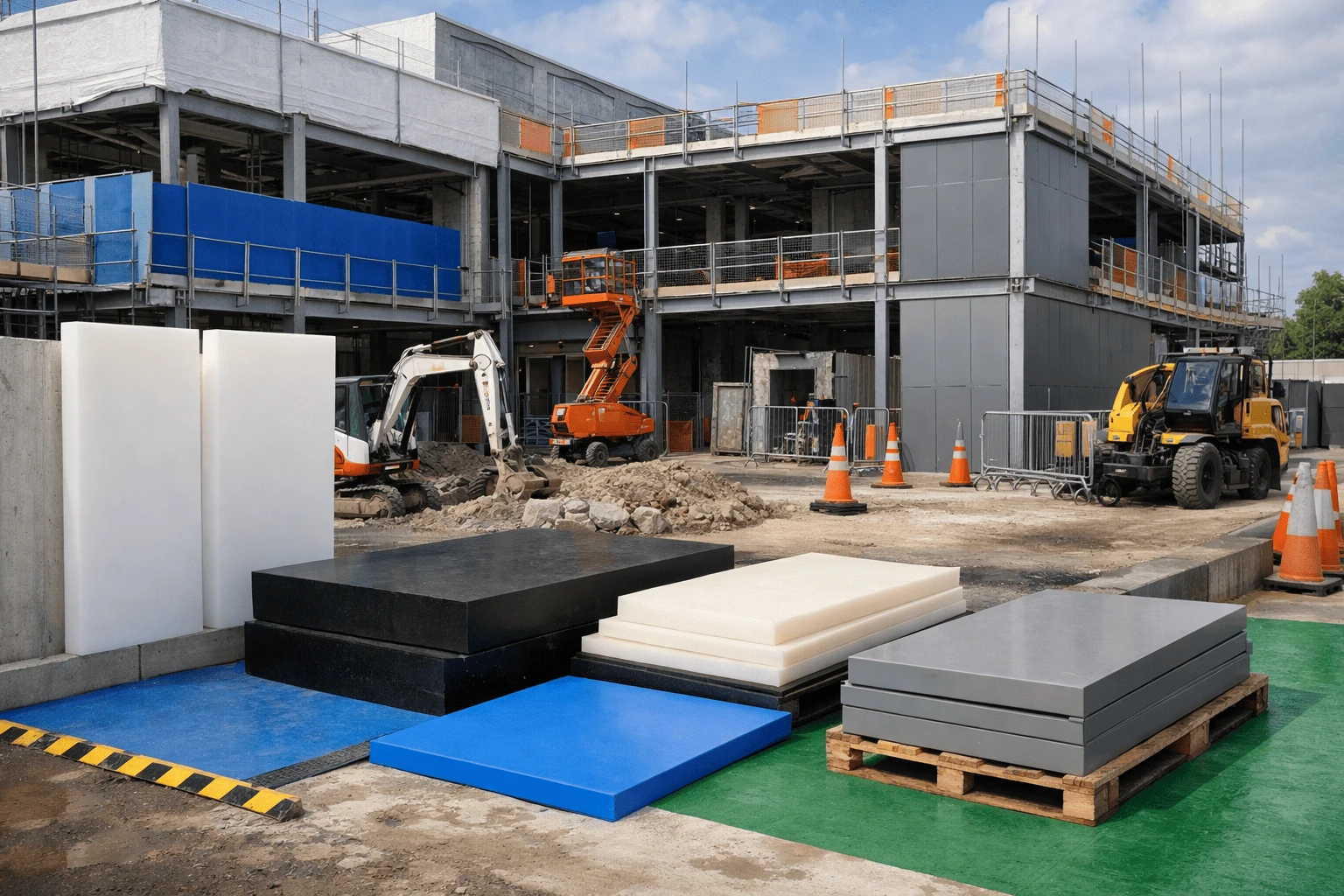
Modern construction and industrial projects require materials that are reliable, adaptable, and capable of performing under diverse conditions. While traditional materials such as timber and metal remain widely used, plastic sheets have become an increasingly essential component of contemporary building, signage, and industrial design. Their combination of strength, durability, and versatility makes them suitable for a wide range of applications, from protective linings and fabricated components to mechanical parts and safety systems.
Plastic sheets are valued not only for their physical performance but also for their consistency and predictability. They resist moisture, chemicals, and environmental wear, which is particularly important. In construction and industrial settings, this reliability helps reduce maintenance requirements and extends service life, especially in areas subject to repeated use or exposure. This guide explores how different types of plastic sheets are used across construction, signage, and industrial environments. Rather than focusing solely on products, it looks at material behavior, application suitability, and emerging industry trends, helping builders, specifiers, and fabricators make informed material choices.
Selecting an appropriate plastic sheet involves understanding how the material will perform under real working conditions. Effective choices are usually based on performance requirements rather than cost alone.
Different plastics respond differently to load, impact, and abrasion. Thinner sheets are suitable for cladding, linings, or signage, while thicker sheets are needed for structural support or areas experiencing repeated impact or mechanical stress. In industrial settings, wear resistance and toughness often take priority over appearance, particularly in high-contact areas. Matching material and thickness to the application ensures durability without unnecessary weight or excess material use.
Outdoor applications must withstand moisture, temperature changes, and prolonged exposure without degrading. Many plastic sheets perform well in damp conditions and do not rot or corrode, making them suitable for external construction elements or unheated industrial spaces. Indoors, priorities often shift toward dimensional stability, hygiene, and resistance to cleaning chemicals. In workshops and production environments, plastics are frequently chosen for surfaces that must remain stable and easy to maintain over time.
Plastic sheets can be machined, cut, or drilled with relative ease. This adaptability supports efficient fabrication and installation, especially for bespoke components. When lifespan and maintenance are considered alongside initial costs, plastics often represent a practical long-term solution.
Some construction and industrial environments place materials under constant stress. In these settings, wear resistance and impact strength are critical.
Ultra-high-molecular-weight polyethylene (UHMWPE) is known for its resistance to abrasion and impact. It is often used in areas where surfaces experience repeated contact, sliding, or mechanical movement. UHMWPE sheets provide reliable protection for high-wear surfaces without adding unnecessary weight.
RG1000 sheets are designed for environments subject to sustained friction and impact, including industrial flooring and high-use contact surfaces. Their resilience makes them a practical option for heavy-duty settings where long-term performance is required.
Not all projects demand extreme wear resistance. Many construction tasks benefit from materials that balance durability, weight, and adaptability.
High-density polyethylene (HDPE) is widely used due to its toughness and resistance to moisture. It performs reliably in both indoor and outdoor environments, making it suitable for wall protection, panels, and fabricated components.
Polypropylene sheets are lightweight and resistant to chemicals, making them suitable for environments exposed to cleaning agents or mild industrial chemicals. Their versatility allows them to be used for both protective linings and more robust fabrication tasks.
Where accuracy and mechanical performance are required, material stability becomes particularly important.
Acetal offers excellent dimensional stability and low friction, which makes it ideal for precision-machined components. In construction-related applications, it is often used for guide systems, supports, and moving parts.
Nylon sheets combine strength and toughness, making them suitable for mechanical and load-bearing applications. They are commonly applied in rollers, bearings, and wear components within industrial buildings.
Some construction settings require materials capable of withstanding aggressive conditions.
Polytetrafluoroethylene (PTFE) is known for its chemical and heat resistance. It is often used for linings, seals, and insulation components in environments exposed to aggressive chemicals or elevated temperatures.
PVC sheets provide a balance of durability, chemical resistance, and ease of fabrication. They are commonly used in electrical enclosures, wall panels, and industrial linings.
Visual identification plays an important role in industrial safety and organisation.
PE500 sheets offer a combination of wear resistance and color versatility, making them useful for zoning, safety identification, guide rails, and protective linings in industrial settings. Plastic sheets demonstrate reliable durability and consistent performance, making them adaptable for a variety of construction and industrial applications without promoting any specific product.
Sustainability considerations increasingly influence material selection. Plastic sheets that offer long service life and reduced maintenance can help limit resource use over time. Thinner, high-performance materials are also specified to achieve the same structural outcome with less material.
Advances in CNC machining and digital fabrication have improved accuracy and reduced waste. Plastic sheets that machine cleanly and predictably are well-suited to these processes, supporting faster project delivery and consistent build quality.
Plastic sheets now play a central role in construction, signage, and industrial environments. Their adaptability allows them to support a wide range of functions, from heavy-duty wear protection to precision-engineered components. Understanding how different materials behave under load, environmental exposure, and repeated use is essential when selecting the right option for each application.
Rather than seeing plastic sheets as a single solution, it is more accurate to view them as a family of materials, each suited to particular challenges. Aligning material properties with real-world requirements helps builders and specifiers achieve better performance, longer service life, and more predictable outcomes. For further reference and material exploration, additional information is available at primeplasts.uk, where a wide range of plastic sheet materials are presented for construction and industrial use.

A tech and business writer who enjoys exploring how innovation, automation, and smart design shape modern industries. Focused on creating informative, easy-to-read content that delivers real value to readers.
At a glance:
4 October 2026
Many industries depend on Hot tapping services in the UAE to repair, modify, or expand pipelines wit
24 July 2026
Construction sites have always generated waste. Offcuts of timber, broken bricks, plasterboard, conc
13 July 2026
Be the first to share your thoughts
No comments yet. Be the first to comment!
Share your thoughts and join the discussion below.










.webp&w=3840&q=75)
.webp&w=3840&q=75)