
* All product/brand names, logos, and trademarks are property of their respective owners.
If you’ve been paying attention to home improvement trends in the UK, you’ll notice something has shifted. People still love a fresh coat of paint, smarter storage, or a quick furniture refresh — but there’s growing interest in materials that feel more thoughtful. Not everything has to be replaced. Not every upgrade needs plastic-heavy components. Sometimes, the biggest difference comes from improving the small “touchpoints” around the home: the handles you grab every day, the straps you use to carry or hang things, and the little reinforcements that keep items functioning well.
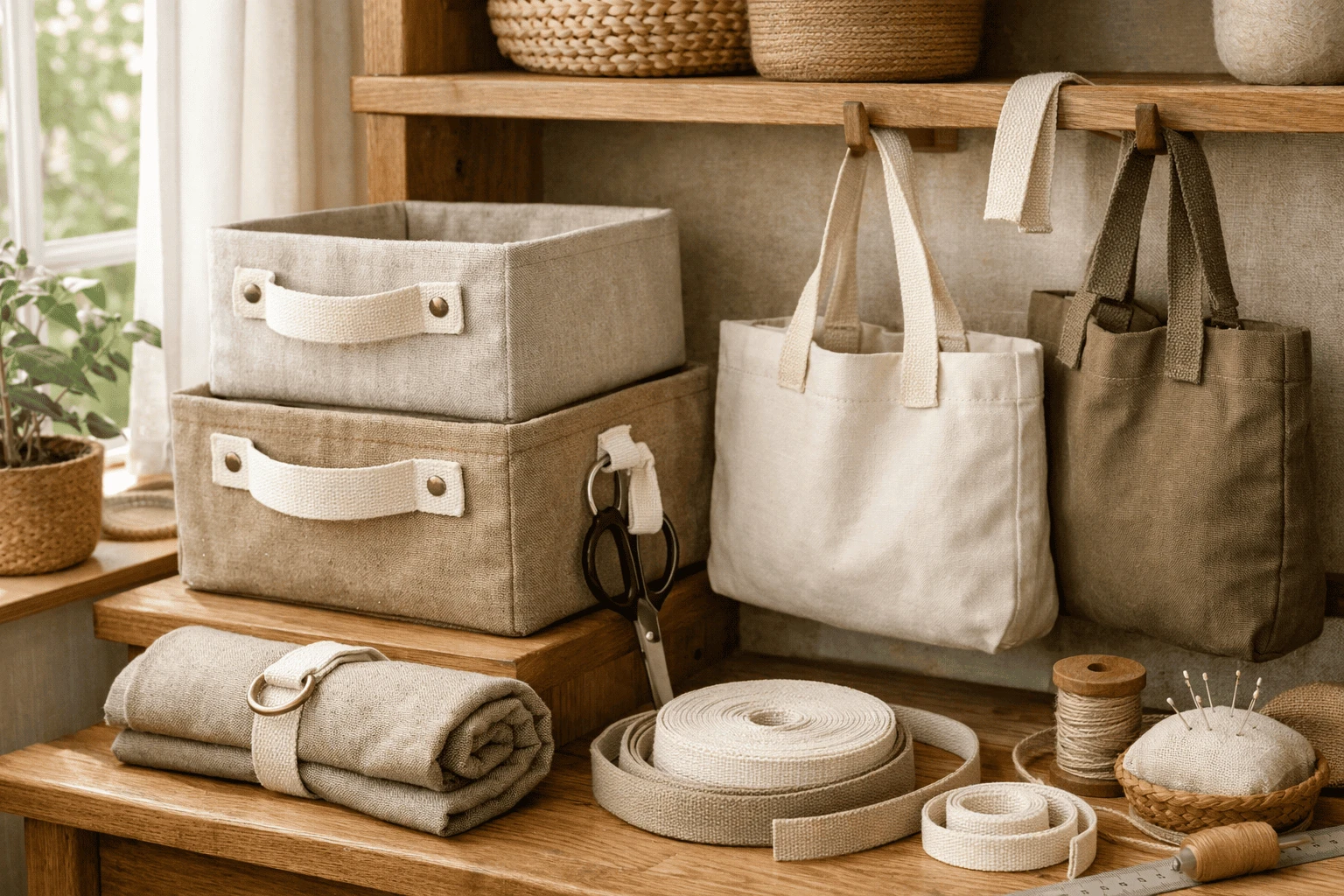
Cotton webbing quietly becomes useful in these scenarios. It’s a strong woven tape made from cotton fibres that doesn’t draw attention but provides structure, durability, and a comfortable touch. For homeowners, DIYers, and makers, it represents a subtle way to enhance everyday items without overcomplicating projects. It also fits naturally into interiors where softer textures and calm finishes are preferred over shiny or industrial details. In a home improvement context, cotton webbing is practical because it’s easy to measure, cut, and attach. You can use it for small repairs, improving storage, or adding handles and straps to items that see regular use. Its comfort in the hand makes it particularly suited to lifting, pulling, or carrying objects frequently.
Many DIY projects naturally blend into bag, strap, and apparel-style applications. Choosing the right width and type is key — wider options for support and comfort, narrower for neat lines and minimal visual impact. This guide explores the practical, everyday benefits of cotton webbing for UK DIYers and homeowners, highlighting eco-friendly choices, subtle functional upgrades, and comfort-focused design.
Home improvement isn’t always about major renovations. Much of it comes down to repeated, small actions: pulling a storage box from a shelf, carrying laundry, lifting a basket, hanging an organiser, or fixing fraying details. These everyday moments are where cotton webbing excels. It provides stability and strength while enhancing comfort and aesthetics, making seemingly minor updates feel significant.
Cotton webbing handles tension effectively because its woven structure spreads stress across its width, preventing strain in one thin point. This makes it ideal for handles, straps, and reinforcement applications where durability is essential.
Common home improvement uses include:
Adding grab handles to fabric storage boxes for easier shelf access
Reinforcing soft organisers that sag when filled
Creating hanging loops for wall storage or utility hooks
Upgrading laundry handling with more comfortable pull points
For DIYers, the predictability of cotton webbing is a big advantage. It cuts cleanly, maintains shape, and can be attached with simple methods like sewing or basic household fixings. Even short lengths are practical for everyday fixes — enough to refresh handles or repair small items.
Products within the Cotton Webbing category are often selected for their strength and versatility, offering practical solutions for small-scale home improvement projects.
Many DIY fixes are functional but uncomfortable or visually unfinished. Cotton webbing avoids these issues with a soft, natural texture. Its feel matters for areas that are handled frequently:
Handles used daily (storage, laundry, organisers)
Straps for carrying items around the home
Pull loops for cupboards, utility storage, or gear bags
Visually, cotton webbing complements UK interiors focused on natural textures, neutral palettes, and soft practical finishes. It upgrades functionality while keeping projects aesthetically cohesive, making small adjustments look intentional rather than makeshift.
Sustainability often begins with small, thoughtful choices. In home improvement, these choices show up in the minor materials that hold items together: straps, ties, handles, and reinforcements that extend product life.
Cotton webbing supports this approach. Instead of discarding a sagging organiser or a bag with a frayed strap, you can reinforce it. Minor updates prevent waste, prolong usability, and reduce the need for new purchases. This approach aligns with eco-conscious living without requiring a complete lifestyle overhaul. In practice, eco-friendly home improvement isn’t always about buying new materials; it’s about making what you have work better — a principle cotton webbing naturally facilitates.
After experimenting with cotton webbing for household fixes, it’s common to spot wider applications. Straps and handles influence comfort, stability, and overall aesthetics, naturally extending into eco-friendly bags and apparel-style DIY projects. Width selection plays a significant role. The correct width ensures straps feel comfortable, remain balanced, and appear intentional. The wrong width can make a project feel awkward, dig into the hand, or look visually unbalanced.
For projects that involve handles, straps, or small loops, the choice of material affects both usability and longevity. Cotton Webbing is well-suited to these tasks, offering strength, flexibility, and a tactile comfort that enhances the practicality of home improvements.
Not all projects require wide straps. Narrower options, like 25mm widths, maintain clean lines for compact builds or lightweight items. They deliver function without bulk and work for:
Small carry items requiring minimal support
Projects where subtle, tidy strap details are preferred
Lightweight household accessories that benefit from proportional straps
In home settings, these slim widths help straps blend in while maintaining usability. They keep DIY projects neat and visually appealing, particularly when items remain on display.
Apparel-style features in DIY don’t require advanced sewing. They involve functional touches that look deliberate: structured loops, clean pull tabs, and defined strap finishes. Cotton webbing’s flat, stable weave makes these enhancements easy while maintaining a natural aesthetic.
Applications include:
Minimal, modern strap designs
Functional loops or tabs for improved usability
Finishing touches that make DIY projects look polished
Selecting the appropriate width remains important. Wider straps communicate support and presence, while narrower options maintain subtle, refined appearances. Both contribute to an intentional, usable end result.
Cotton webbing brings together functionality, comfort, and a refined look, improving everyday items such as handles, straps, and loops. Its strength and versatility make it a practical choice for DIY projects.
By making small, considered updates, users can extend the life of their belongings and reduce unnecessary replacements. For practical guidance and examples of using webbing in home projects, explore straptapes.co.uk naturally in your workflow.

Finn a writer who enjoys creating simple, expressive, and engaging content. I like turning everyday ideas into clear and meaningful writing that feels natural, fresh, and easy for readers to connect with.
Finding the perfect life partner is an important journey filled with hope, excitement, and expectati
12 October 2026
Choosing the right outfit is about more than following fashion trends. It involves understanding the
9 October 2026
Modern life runs on an unquestioned pursuit of speed. Instant messaging, rapid-fire media feeds, and
3 October 2026
Be the first to share your thoughts
No comments yet. Be the first to comment!
Share your thoughts and join the discussion below.








.webp&w=3840&q=75)
.webp&w=3840&q=75)