
* All product/brand names, logos, and trademarks are property of their respective owners.
Cotton webbing is one of those practical materials that quietly improves everyday life at home. It’s a flat, woven cotton strap designed to handle tension—meaning it can be pulled, tied, stitched, and secured while staying relatively stable and flat. If you’ve ever needed a neat pull loop, a soft tie strap, or a simple way to organise something without bulky hardware, cotton webbing is worth understanding.
For UK homeowners and DIY enthusiasts, it sits in a useful middle ground. It’s softer and more comfortable than many synthetic alternatives, yet structured enough to handle light-to-moderate household tasks. Because it’s made from cotton, it also feels more natural indoors—especially in living spaces where comfort and appearance matter as much as function. This guide explains cotton webbing in straightforward terms: what it is, why it works, where it fits into common home projects, and how to choose the right size for practical results.
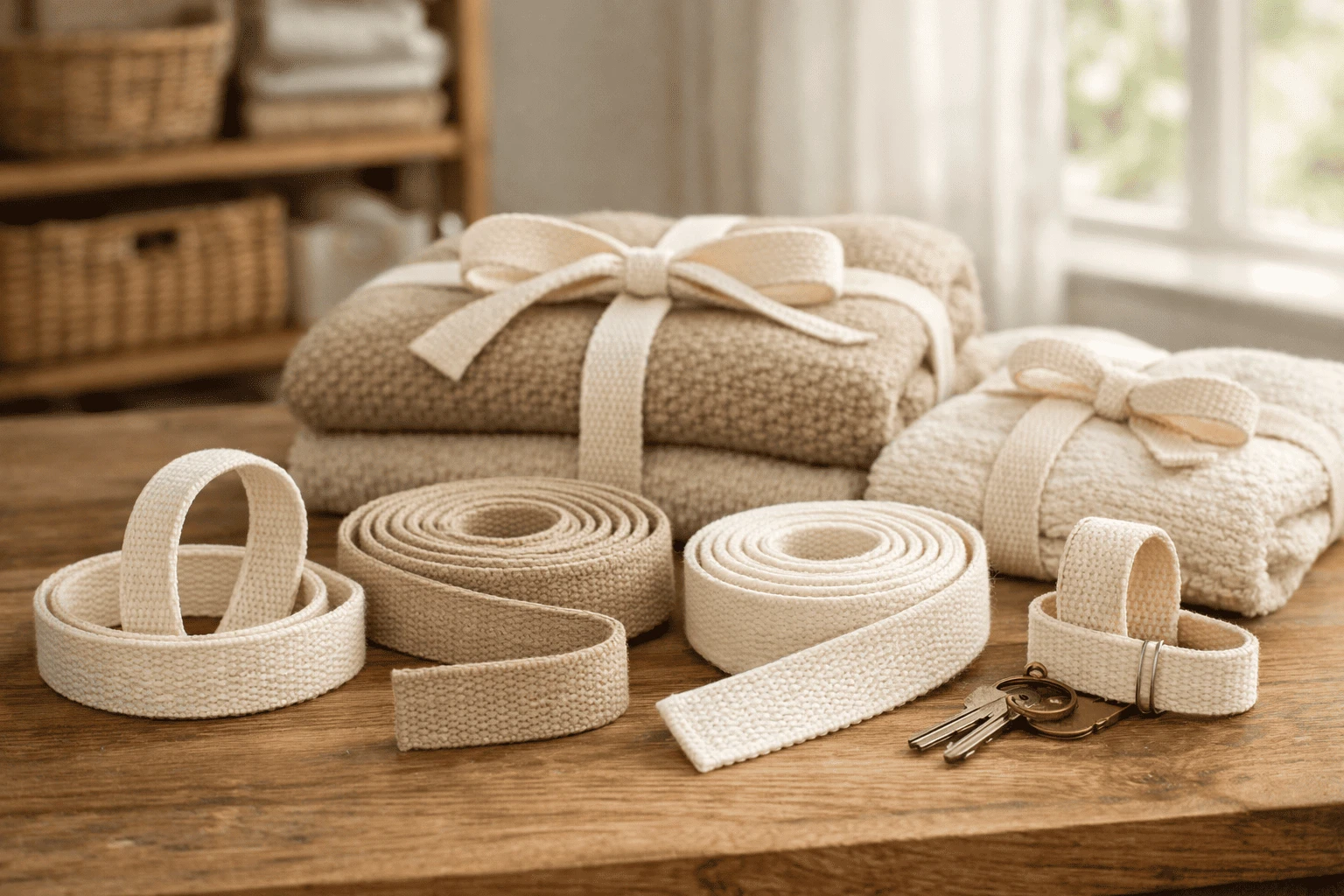
Cotton webbing is a tightly woven strip of cotton fibres engineered to resist twisting and stretching under everyday pulling. Unlike regular fabric strips that can bunch or roll into a cord shape, webbing is constructed to stay flat. That flat, stable profile is exactly why it’s useful in home settings—it behaves predictably when tension is applied. In practical terms, think of it as a structured strap that still feels soft in the hand. It’s more supportive than standard cloth but not stiff or abrasive. The width you choose influences both appearance and feel. A slimmer 25mm strap tends to look discreet and tidy, while a 38mm strap provides a broader grip and feels more substantial.
Many materials work on paper but feel different in daily use. Cotton webbing is comfortable, with a slightly textured weave that grips without being rough. For tasks like pull loops or tie straps, a short length lets you test comfort, placement, and appearance before applying it more widely.
Cotton webbing’s strength comes from its woven fibres, which spread tension evenly along the strap. While not for heavy loads, it handles everyday household tasks well—resisting twisting, staying flat, and keeping a neat appearance. It’s also easy to cut, fold, and stitch, making it ideal for DIY projects.
When people describe cotton as “environmentally safe,” it’s important to stay realistic. Cotton is a natural fibre, and many homeowners appreciate that for indoor use. It tends to feel less synthetic and more breathable in comparison to plastic-based materials. Choosing cotton webbing for light home upgrades aligns with a more considered approach to materials—particularly when comfort and aesthetics are priorities. It’s not about claiming perfection; it’s about selecting something functional that also feels appropriate for everyday living spaces.
Cotton webbing becomes most useful when viewed as a small but effective problem-solver. In many homes, practical improvements are subtle: a strap that makes storage easier, a tie that reduces clutter, or a loop that adds convenience without visible hardware.
As a general guideline, 25mm works well when you want a discreet look, while 38mm suits situations where grip and visibility matter more.
Hallways gather clutter, and living rooms benefit from tidy details. Cotton webbing can help create repeatable solutions that look intentional rather than improvised.
Practical ideas include:
Pull loops for storage boxes or baskets: A simple loop makes it easier to slide items from shelves. A 25mm strap often looks clean and minimal.
Tie straps for rolled throws or blankets: Keeping textiles secured helps maintain order in open storage.
Light organiser straps: Grouping small household items neatly reduces visual clutter.
These adjustments reduce small, recurring inconveniences—the kind that slowly build into daily frustration.
Utility spaces prioritise function. Items need to stay grouped, accessible, and easy to handle. Cotton webbing works well here because it lies flat and feels comfortable during repeated use.
Common applications:
Bundling frequently used items: Tie straps prevent loose items from scattering.
Hanging loops: Adding a loop gives lightweight tools or accessories a consistent location.
Securing straps: A 38mm width can feel more secure when stability is the goal.
If you notice loops or straps that frequently slip or tangle, Cotton Webbing is a practical choice. Its woven structure makes it easy to thread and secure, providing a durable, comfortable solution for everyday adjustments and repairs.
Comfort matters most in bedrooms and children’s spaces. Materials that are touched frequently should feel gentle and unobtrusive.
Useful examples include:
Soft tie straps for light organisation
Pull loops that prevent pinched fingers
Subtle organisers that blend into décor
A 25mm strap often works well in these rooms because it looks understated. If the strap is intended to feel more like a handle, a 38mm width may provide a better grip and visual balance. A helpful way to remember the distinction:
25mm = neat and subtle
38mm = sturdier and easier to grasp
Selecting the correct width makes a noticeable difference. The right choice depends on three factors:
How often it will be used
How visible it will be
How substantial it should feel in the hand
A 25mm cotton webbing strap works well when subtlety is important. It suits:
Small pull loops
Tidy tie straps
Light-duty organisers
Narrow spaces where bulk would look awkward
Its slimmer profile keeps projects looking refined rather than heavy.
A 38mm strap offers more surface area, which can improve comfort and perceived stability. It’s often better suited to:
Frequently pulled straps
Situations where a 25mm width feels too delicate
Utility areas where grip matters more than subtlety
In short, if the strap is meant to feel substantial and reliable, 38mm may be the more satisfying choice.
Many DIY improvements are small. A single 1m length is often enough for:
One pull loop
One securing tie
Testing placement before repeating the idea
Checking how a width fits with your décor
Trying one version first helps you confirm comfort and proportion before committing to larger adjustments.
Start small: find one area that’s inconvenient—like a strap that twists or a space that’s hard to reach. Adjusting strap width and alignment often makes a noticeable difference. For an overview of materials and sizes suited to home projects, straptapes.co.uk offers practical guidance.

Finn a writer who enjoys creating simple, expressive, and engaging content. I like turning everyday ideas into clear and meaningful writing that feels natural, fresh, and easy for readers to connect with.
A home elevator can make everyday movement between floors more convenient, especially in multi-store
25 September 2026
Home decor plays an important role in making one’s house feel comfortable, welcoming, and appe
7 August 2026
Planning Kitchen Renovations Sydney homeowners can be proud of requires more than choosing stylish c
19 June 2026
Be the first to share your thoughts
No comments yet. Be the first to comment!
Share your thoughts and join the discussion below.










.webp&w=3840&q=75)
.webp&w=3840&q=75)