
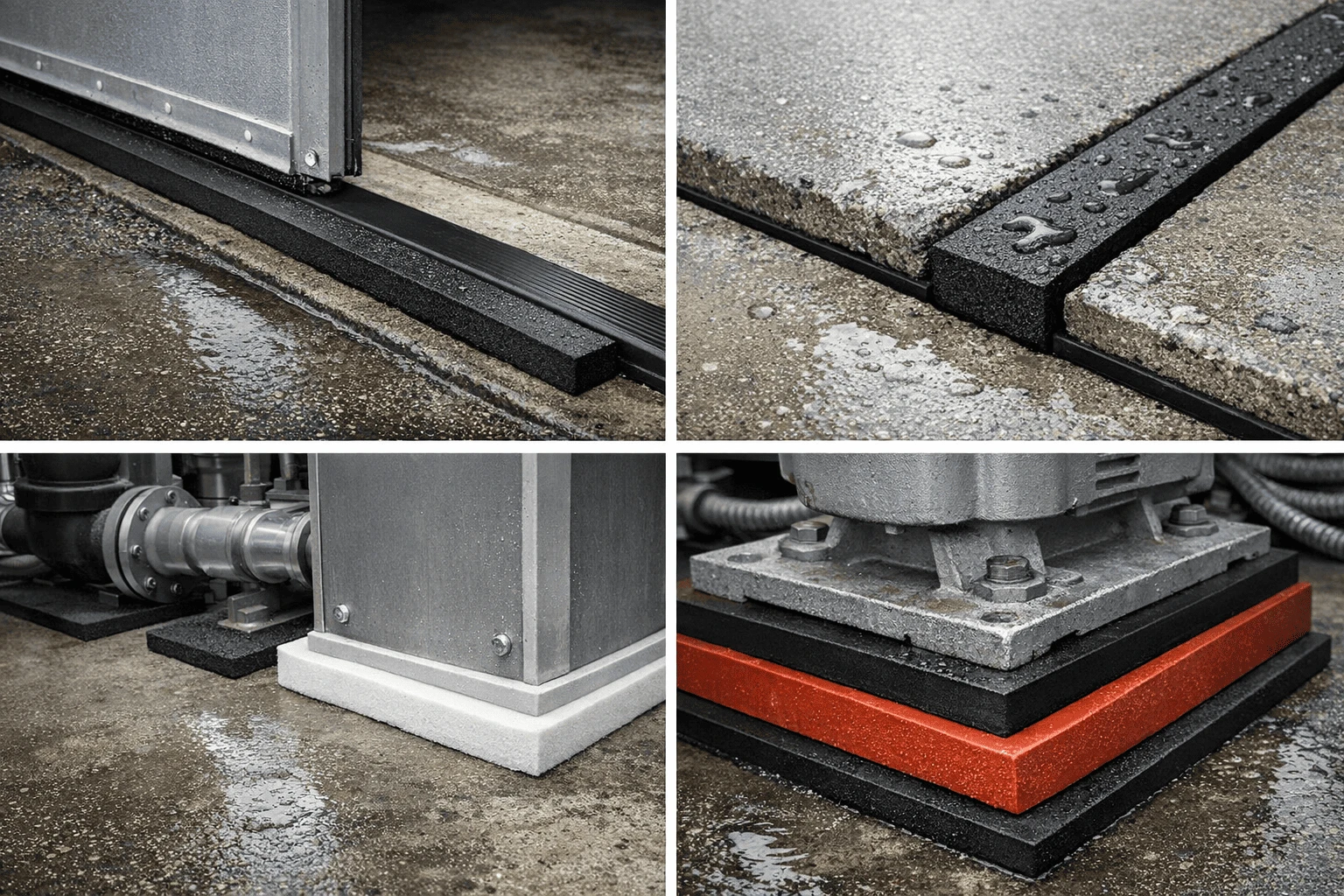
When rubber materials fail, the consequences often show up elsewhere: water ingress around doors, vibration damage in plant rooms, degraded seals in expansion joints, or increased maintenance costs over time. For builders and contractors, selecting the right rubber strip is not simply about filling a gap — it is about ensuring long-term performance in demanding conditions. From high-hardness solid rubber used in load-bearing zones to flexible sponge variants designed for compression and weatherproofing, heavy-duty rubber strips support structural integrity across a wide range of construction applications. Understanding how material type, hardness, and installation method influence performance is key to making informed decisions.
The Demands of Heavy-Duty Construction Environments
Construction environments place significant stress on materials. High footfall, equipment movement, fluctuating temperatures, and mechanical vibration all test the resilience of sealing systems. Rubber strips used in these settings must retain their shape, flexibility, and performance characteristics over extended periods.
Compression Resistance & Load-Bearing Stability
In spaces like warehouses, loading bays, and plant rooms, rubber strips face constant compression. Hardness, measured in Shore A, determines how well they handle sustained pressure. Strips in the 60–75° range provide firm support, ideal for impact-prone areas or structural buffering. High-density solid rubber, such as 75° Shore A, resists deformation, keeping doors and thresholds stable. Choosing the right hardness is key—a strip that’s too soft loses sealing, while one that’s too stiff can’t adapt to surfaces. Proper selection prevents early wear and costly repairs.Shock Absorption & Vibration Control
Mechanical systems and industrial equipment create vibrations that can travel through building structures, causing noise, loosening fixtures, and surface wear over time. Rubber strips, like nitrile and neoprene, are used to absorb shock and reduce vibration at contact points. Nitrile strips (60–65° Shore A) balance firmness and flexibility, protecting machinery bases, while neoprene, including expanded sponge types, compresses and rebounds reliably. Installing these vibration-dampening strips at key points enhances structural durability and lowers long-term maintenance needs.Weatherproofing for the UK’s Harsh Climate
The UK’s climate presents a consistent challenge for sealing materials. Persistent rainfall, high humidity, frost cycles, and seasonal temperature swings require rubber strips that resist degradation while maintaining flexibility.
External Doors, Marine & High-Moisture Areas
External doors and building joints must resist moisture, ozone, and structural movement. EPDM rubber retains flexibility, and expanded neoprene sponge strips allow effective compression on uneven surfaces. Incorporating Rubber Strips offers a practical sealing solution, ensuring that doors, expansion joints, and façades remain protected against drafts, water penetration, and environmental stresses in demanding outdoor settings.Silicone-Based Sealing for Long-Term Exposure
Where temperature extremes or UV exposure are a concern, silicone rubber provides additional reliability. Unlike many materials, silicone maintains flexibility across a wide temperature range, making it suitable for both heated interiors and exposed external settings.
White silicone rubber weathering strips are often used in visible installations where appearance matters alongside performance. Heat-resistant expanded silicone strips are appropriate for environments exposed to elevated temperatures, while flame-retardant solid silicone strips offer enhanced safety characteristics in regulated spaces. Selecting the right weather-resistant material ensures that seals remain effective throughout seasonal changes, reducing the risk of premature deterioration and ongoing repair work.
Speed & Efficiency on Site – Smarter Installation Choices
Efficiency on-site is closely linked to material selection. Rubber strips that are straightforward to install can reduce labour time without compromising durability.
Self-Adhesive Strips for Faster Fit-Out
Self-adhesive formats have become increasingly common in construction, particularly during internal fit-outs. Expanded neoprene sponge strips with pre-applied adhesive backing allow for quicker installation around doors, partitions, and panels. Similarly, self-adhesive silicone strips provide reliable bonding while retaining flexibility in environments subject to temperature variation.
These solutions can streamline installation in phased developments or refurbishment projects where time constraints are significant. When properly applied to clean, prepared surfaces, they provide consistent compression and sealing without the need for mechanical fixings.
Permanent Bonding for Structural Reliability
In heavy-duty environments or vertical applications, additional reinforcement may be required. A non-drip, high-strength multi-purpose adhesive can provide long-term bonding strength, particularly where strips are installed overhead or subjected to vibration.
Using an appropriate adhesive alongside solid neoprene or other dense rubber strips ensures stability in demanding conditions. Combining the right material with the correct fixing method supports both durability and efficiency, reducing the likelihood of displacement or failure over time.
Compliance & Fire Safety in Commercial Builds
Compliance plays a central role in commercial construction. Materials used within buildings must often meet recognised fire performance standards, particularly in public or multi-occupancy developments.
Meeting BS476 Class 0 Requirements
Expanded PVC nitrile sponge strips manufactured to BS476 Class 0 standards are designed to limit the surface spread of flame. These materials are frequently specified in commercial interiors, service penetrations, and partition systems where inspection and documentation standards apply.
Beyond fire performance, PVC nitrile blends also offer resistance to moisture and oils, making them practical for plant rooms or service corridors where exposure conditions may vary.
Flame-Retardant Materials in High-Risk Zones
In environments with heightened fire safety considerations, flame-retardant silicone strips provide an additional layer of protection. Their temperature resistance and flexibility make them suitable for electrical enclosures, industrial spaces, and areas requiring enhanced compliance awareness. Integrating compliant materials at the specification stage supports smoother project delivery and reduces the risk of costly late-stage substitutions.
Choosing the Right Rubber Strip for Your Project
Selecting the appropriate rubber strip involves more than choosing a thickness or width. Builders must evaluate environmental exposure, load requirements, compliance needs, and expected lifespan.
Material Selection Guide – Neoprene, EPDM, Silicone, or Nitrile?
Neoprene offers versatile performance and reliable weather resistance. EPDM excels in outdoor environments with high UV and ozone exposure. Silicone performs well under temperature extremes and in fire-conscious settings. Nitrile provides resistance to oils and fuels, making it suitable for industrial areas. Understanding these distinctions helps ensure the material aligns with the specific demands of the installation.
Hardness, Thickness & Application Considerations
Hardness ratings influence compression behaviour and durability. Higher Shore A values are suited to impact zones, while softer expanded sponge strips accommodate uneven gaps. Accurate measurement of joint widths and anticipated compression rates ensures optimal sealing without overloading the material. By aligning material properties with environmental and structural requirements, contractors can enhance longevity, maintain compliance, and reduce the likelihood of premature failure. Durability is a core requirement in construction. Across commercial developments, refurbishments, and industrial builds throughout the UK, materials are exposed to constant pressure, vibration, impact, and environmental stress. Rubber strips may appear to be small components within a larger system, yet they perform essential functions — sealing, cushioning, protecting, and reinforcing structural elements.
Conclusion
Rubber strips are often understated components within construction projects, yet their contribution to durability, compliance, and overall building performance is significant. From managing vibration and compression to providing reliable weather seals in challenging UK conditions, the correct material choice supports structural resilience over time.
Careful evaluation of hardness ratings, environmental exposure, and regulatory requirements enables builders to specify solutions that perform consistently under pressure. Whether used for door sealing, expansion joints, plant rooms, or fire-rated applications, heavy-duty rubber strips serve a preventative and performance-driven role in construction quality. For those reviewing specifications or comparing material properties for upcoming projects, additional technical information and product details are available at commercialstrips.co.uk.







.webp&w=3840&q=75)


.webp&w=3840&q=75)