
* All product/brand names, logos, and trademarks are property of their respective owners.
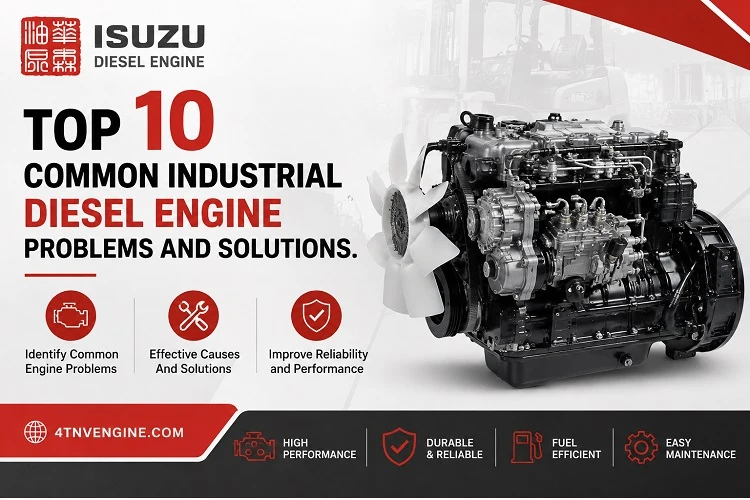
The industrial diesel engine is commonly found in construction equipment, generators, agricultural equipment, and mining and manufacturing facilities. These engines are known for their toughness, fuel economy, and robust performance in extreme conditions. Like all mechanical systems, however, they can have problems over time as a result of wear, operating conditions, or lack of maintenance. Knowing about some of the most prevalent engine issues and their solutions can be useful in minimizing downtime, maintaining performance, and avoiding expensive repairs.
This guide explains the ten most common industrial diesel engine problems, what causes them, practical solutions, and how to maintain your engine to keep it running efficiently.
Symptoms:
Rising engine temperature gauge
Steam from the cooling system
Loss of coolant
Causes:
Insufficient coolant
Blocked radiator passages
Defective thermostat
Solution:
Regularly check and replenish coolant.
Flush and clean the radiator system
Change a broken thermostat
Note: Coolant grade recommended by the manufacturer should always be used to ensure proper system operating temperatures and to protect the cooling system.
Symptoms:
The engine cranks slowly
Failure to start
Repeated starting attempts
Causes:
Weak battery
Worn glow plugs
Fuel delivery issues
Solution:
Test and replace battery as needed
Replace Glow Plugs if worn
Check the fuel supply system
Note: Battery/glow plug checks are particularly important in cold weather when starting problems are likely to occur.
Symptoms:
Rough engine operation
Reduced fuel economy
Excessive exhaust emissions
Causes:
Poor-quality diesel fuel
Clogged fuel filters
Water contamination
Solution:
Change fuel filters as recommended
Clean up damaged fuel tanks
Use clean, high-quality diesel fuel
Note: Fuel treatment additives can be used to keep injectors cleaner and improve fuel system performance.
Symptoms:
Reduced engine power
Slow acceleration
Unusual turbo noises
Causes:
Dirty engine oil
Damaged turbo components
Restricted airflow
Solution:
Perform scheduled oil changes
Check and replace broken turbo parts
Make sure air filters are clear.
Note: Adequate lubrication will help to prolong the life of the turbocharger and maintain peak engine performance.
Symptoms:
Black, blue or white smoke from exhaust.
Causes:
Black smoke: Poor fuel combustion
Blue smoke: Oil in combustion chamber
Brown smoke: Coolant contamination or other combustion issues
Solution:
Service or replace fuel injectors
Check piston rings and seals
Test cooling system elements
Note: A good tip to remember is to watch the smoke for color to determine if there is a problem before it becomes a large repair.
Symptoms:
Engine hesitation
Power loss
Hard starting
Causes:
Component wear
Contaminated fuel
Lack of maintenance
Solution:
Have regular servicing of injection pumps.
Replace damaged parts as soon as possible
Ensure the fuel supply system is kept clean
Note: Inspect injection pumps, especially for engines that have heavy loads.
Symptoms:
Check engine warning light
Rough idling
Reduced engine responsiveness
Causes:
Carbon deposits
Sensor failure
Restricted EGR passages
Solution:
Optimize EGR valves and passages
Replace faulty sensors
Replace EGR valve as required
Note: Cleaning the EGR regularly can benefit fuel economy and emission compliance.
Symptoms:
Oil pressure warning light
Engine knocking sounds
Poor lubrication performance
Causes:
Worn bearings
Faulty oil pump
Low oil level in engine.
Solution:
Regularly inspect and adjust oil levels.
Change oil and filters as recommended.
Inspect Lubrication System Parts
Tip: If oil pressure is low, it may cause serious damage to the engine and costly repairs.
Symptoms:
Engine misfires
Rattling noises
Starting issues
Causes:
Timing belt/chain worn
Damaged tensioners
Component misalignment
Solution:
Change out timing parts as per maintenance schedules.
Check tensioners and pulleys
Address alignment problems ASAP
Note: Failure to compensate for the wear of timing can cause serious engine damage.
Symptoms:
Frequent overheating
Coolant loss
Leaks under equipment
Causes:
Cracked hoses
Damaged radiator
Faulty water pump
Seals or gaskets that are worn.
Solution:
Change out damaged cooling parts
Repair leaks immediately
Regularly check the state of the water pump.
Tip: A pressure test for cooling system leaks can help uncover leaks before they can lead to significant problems.
Looking to maximize the efficiency of your industrial diesel engine?
Periodically use diesel fuel additives for cleaning.
Change air filters every 20,000 km or as per operating conditions.
Always run within the engine's load limits.
Regularly clean air intakes and intercoolers.
Keep up with the manufacturer-recommended servicing intervals.
Check operating temperature and fluid level on a daily basis.
An industrial diesel engine is designed to deliver dependable performance in demanding industrial applications. Over time, though, there are potential problems with efficiency and reliability, such as overheating, fuel contamination, turbocharger failure, injector pump wear, and cooling system leaks. Fortunately, many of these issues can be avoided or addressed by regular maintenance, timely checks, and the installation of top-tier replacement components and fluids. Proper maintenance of the servicing, fuel, cooling system, and lubrication all help increase engine life and reduce operating costs. With quality support and components from the 4TNV engine, such preventative steps can improve equipment reliability, optimize productivity, and ensure that businesses get the long life they need from industrial diesel engines.
One of the most common problems reported is fuel system contamination. Dirty fuel, clogged filters, or deposits on the injectors can lead to poor performance, poor fuel economy, and rough-running engines.
Many industrial diesel engines can achieve 15,000 to 30,000 hours, or even more, of efficient operation when operated under the right conditions and properly maintained and serviced.
Yes. Industrial diesel engines are known for their durability, fuel efficiency, and capacity to perform heavy-duty workloads. To ensure long-term reliability and performance, regular maintenance is key.

I’m a positive and ambitious person who enjoys learning new things, meeting people, and growing through every experience. I value honesty, confidence, and keeping a balanced outlook in life.
Workplace safety has come a long way over the past few decades, and one area that has seen major imp
18 August 2026
When you walk into any major concert event today, the first thing that hits you is the visuals. You
11 August 2026
If you're new to purchasing components for a surface-mount assembly the feeder is among the first th
11 August 2026
Be the first to share your thoughts
No comments yet. Be the first to comment!
Share your thoughts and join the discussion below.
.webp&w=3840&q=75)





.webp&w=3840&q=75)
.webp&w=3840&q=75)


.webp&w=3840&q=75)
.webp&w=3840&q=75)