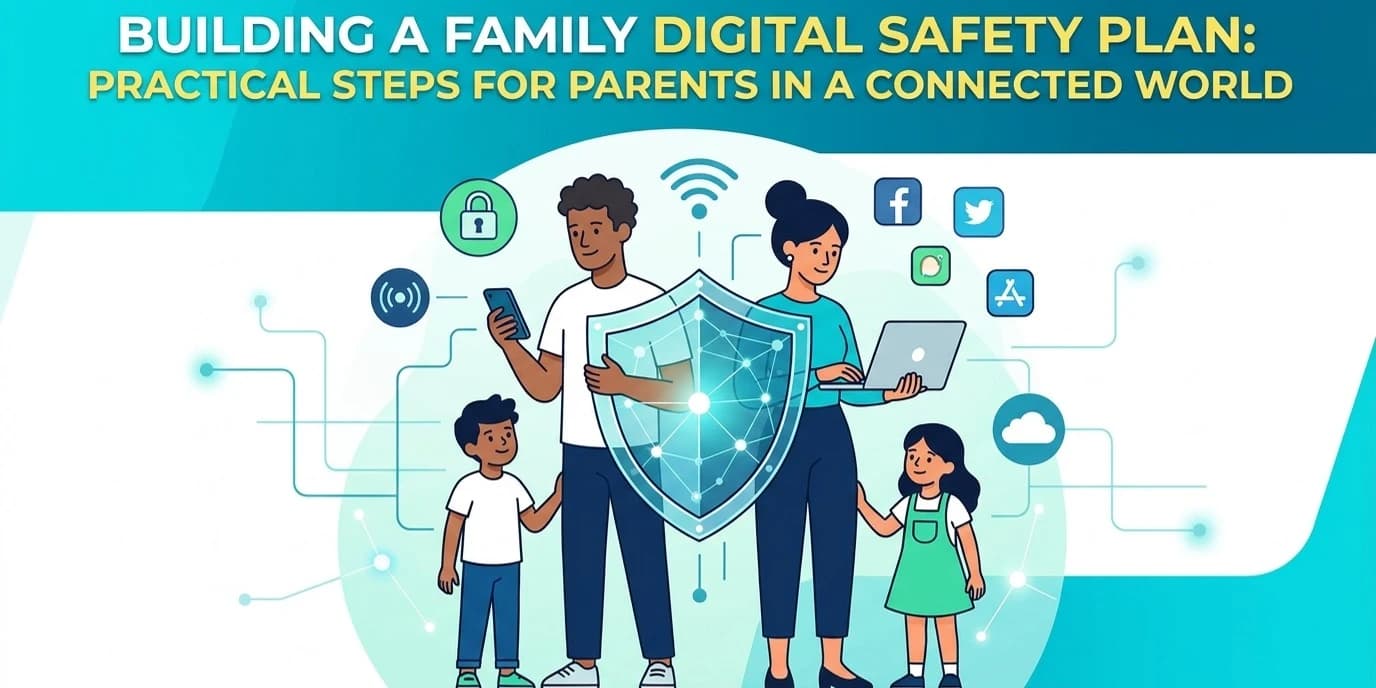

* All product/brand names, logos, and trademarks are property of their respective owners.
Technology has become part of almost every aspect of modern family life. From checking school updates and ordering groceries to attending online meetings and staying in touch with relatives, digital tools have changed how families communicate, work, learn, and spend their free time.
Think about a typical evening at home. One family member might be finishing a work assignment on a laptop, another could be helping a child with online homework, while someone else is catching up with friends through a messaging app. Everyone is together, yet each person may be experiencing a different digital world.
This change brings convenience and new opportunities, but it also raises questions about family relationships, privacy, children's online experiences, and the importance of spending time together.
Rather than viewing technology as either entirely good or bad, families can learn to use it thoughtfully and make it support their everyday lives.
One of the biggest changes technology has brought to family life is the way people communicate. Video calls, messaging apps, and social platforms make it possible to stay connected even when family members live in different cities or countries.
Parents working away from home can check in with their children during the day. Grandparents can watch important family moments through video calls, and relatives living abroad can remain involved in everyday conversations.
Technology has also made family coordination easier. Shared calendars, group chats, and reminder apps help everyone stay informed about school activities, appointments, celebrations, and household responsibilities.
However, digital communication should complement personal conversations rather than replace them. A quick message can share information, but sitting together and discussing the day's experiences creates a different kind of connection.
Today's children have access to learning opportunities that previous generations could hardly imagine. Educational videos, interactive lessons, digital libraries, and online learning platforms allow them to explore subjects beyond their schoolbooks.
A child interested in space can discover how planets work. Someone who enjoys drawing can follow digital art lessons, while another child might develop an interest in coding or storytelling.
These opportunities can encourage curiosity and independent learning. Technology also helps parents participate in their children's education through school portals, digital assignments, and communication with teachers.
Still, not everything available online is educational or suitable for every age group. Children benefit when parents help them identify reliable resources, understand online information, and balance digital learning with reading, outdoor activities, and practical experiences.
Family entertainment once commonly involved television, board games, outdoor activities, or conversations around the dinner table. Today, streaming platforms, online games, and social media offer almost unlimited entertainment choices.
These options can bring families together. Parents and children can watch a film, play a multiplayer game, or explore an interesting documentary as a shared activity.
The challenge begins when everyone becomes absorbed in separate screens. A family may spend an entire evening in the same room without having much meaningful interaction.
A practical solution is to make room for both digital and offline entertainment. Families can enjoy a movie night while also setting aside time for cooking together, walking, playing board games, or simply talking.
The aim is not to remove technology from family life but to make sure it does not replace every other activity.
Parenting has always involved teaching children about responsibility, personal boundaries, and making sensible decisions. In today's connected world, these lessons also need to include digital behavior.
Children may encounter unfamiliar contacts, misleading information, online arguments, inappropriate content, or requests for personal information. They may not always recognize when an online interaction deserves caution.
Parents therefore have a new responsibility: helping children understand how to navigate digital spaces safely.
This starts with open conversations. Instead of simply telling children what not to do, parents can explain why privacy matters, why strangers online should be approached carefully, and why personal information should not be shared casually.
Families can also agree on age-appropriate rules for device use, social media, gaming, and online communication. These expectations work best when children understand the reasons behind them and have an opportunity to share their concerns.
For parents looking for practical guidance, resources about digital parenting and family online safety can provide another starting point for understanding the challenges of children's connected lives.
Family privacy is no longer limited to keeping personal documents or household information secure. Photos, messages, location details, school information, and social media activity can all contribute to a family's digital footprint.
Even ordinary activities can involve sharing personal information. Posting a child's school achievement, uploading holiday photographs, or sharing a family celebration may reveal details that children would prefer to keep private as they grow older.
Parents can help by thinking before posting and discussing digital privacy with their children.
Some useful habits include:
Avoid sharing children's full names, school details, or routines publicly.
Use strong, unique passwords for important accounts.
Review privacy settings on social media and other platforms.
Be cautious about unknown links, messages, and online requests.
Ask children before sharing photographs or personal stories involving them.
Respecting a child's privacy is also important. Keeping children safe should not mean ignoring their growing need for independence and personal boundaries.
Remote work, online meetings, digital payment services, and productivity applications have changed how many parents manage their professional responsibilities.
For some families, flexible working arrangements make it easier to spend time with children, attend school meetings, or manage household responsibilities. Digital tools can also reduce travel and simplify everyday tasks.
However, working from home can make it difficult to separate professional responsibilities from family time. A parent may be physically present but mentally occupied with emails, deadlines, or virtual meetings.
Setting clear working hours, creating a dedicated workspace, and putting devices aside during important family moments can help establish healthier boundaries.
Children also learn from what adults do. When parents demonstrate balanced technology habits, they show that digital devices are useful tools rather than the center of everyday life.
Every family has different routines, responsibilities, and technology needs. A household with school-aged children may use devices differently from one with teenagers or younger children.
That is why there is no single screen-time rule that works for everyone. What matters is understanding how technology affects daily activities, sleep, learning, relationships, and opportunities for offline experiences.
Families can begin with a few manageable habits:
Create screen-free moments during meals and family conversations.
Establish consistent bedtime routines that allow time away from devices.
Encourage hobbies that do not depend on screens.
Discuss online experiences without making children afraid to ask for help.
Review family technology rules as children grow and their needs change.
Parents should also consider their own habits. It is difficult to encourage children to put their phones aside if adults are constantly checking notifications.
A balanced approach works better when it is a shared family effort rather than a set of rules imposed only on children.
Artificial intelligence is adding another dimension to modern family life. Children may already use AI-powered learning tools, recommendation systems, voice assistants, and creative applications.
These technologies can support learning and creativity, but children also need to understand their limitations. AI-generated information is not always accurate, and sharing personal details with unfamiliar digital services can create privacy concerns.
Parents can help children develop a habit of questioning what they see online, checking important information, and using AI as a learning aid rather than accepting every response as fact.
Conversations about responsible AI use, digital identity, and online privacy will become increasingly important as these tools become more common.
Technology has changed modern family life in many ways. It has made communication easier, expanded educational opportunities, introduced new forms of entertainment, and created different ways for parents to support their children.
At the same time, it has made privacy, digital boundaries, and meaningful family interaction more important than ever.
The answer is not to reject technology or allow it to control every part of daily life. Families need to understand its benefits, recognize its limitations, and develop habits that reflect their values.
Ultimately, a connected family is not simply one in which everyone owns a smartphone or uses the latest applications. It is one in which technology supports learning, communication, creativity, and safety while leaving enough room for real conversations and shared experiences.

Western shirts for men started as tough workwear on cattle ranches, built to handle long days in the
12 November 2026
Staying warm during cold weather does not mean wearing heavy layers that restrict movement or make a
28 October 2026
Finding the perfect life partner is an important journey filled with hope, excitement, and expectati
12 October 2026
Be the first to share your thoughts
No comments yet. Be the first to comment!
Share your thoughts and join the discussion below.