* All product/brand names, logos, and trademarks are property of their respective owners.
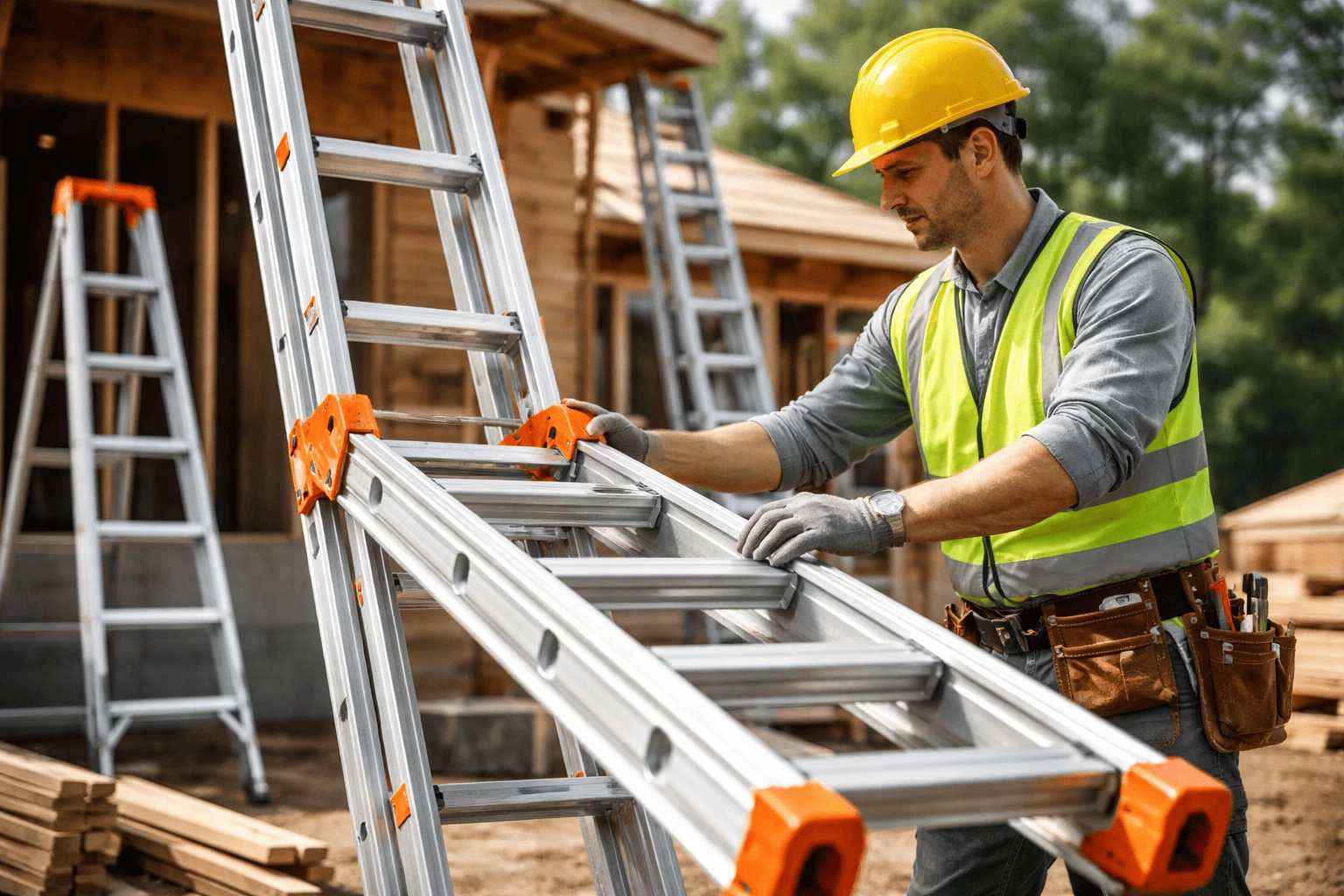
Working at height comes with its own set of challenges and risks. Whether you're a homeowner cleaning gutters, a contractor working on-site, or a technician installing systems overhead, one essential piece of equipment you can't compromise on is your ladder. Choosing the right extension ladder is critical not just for getting the job done efficiently, but for ensuring your personal safety.
In this guide, we'll break down the key factors to consider when selecting an extension ladder, explain how safety ratings work, highlight useful features, and help you find a ladder that suits your specific needs and environment.
Before buying any ladder, the first thing to assess is the height you need to reach. Extension ladders are designed to extend, often in sections, and their total length is different from their usable height. A good rule of thumb is the 4:1 ratio—for every 4 feet in height, your ladder base should be 1 foot out from the wall. This creates a safe working angle.
For example, if you're working on a second-story roof, you might need a ladder with at least 24–28 feet of length to reach the edge safely while maintaining the correct angle. Never use the top three rungs of an extension ladder as a standing platform; this compromises balance and increases fall risk.
Also, consider the overlap between sections, which reduces usable height. For instance, a 28-foot ladder may offer only 25 feet of usable climbing height due to required section overlap.
Material plays a key role in ladder performance and safety. The two most common materials are:
Aluminum: Lightweight and easy to carry, great for general outdoor work. However, it conducts electricity, so it's not safe near power lines or electrical work.
Fiberglass: Heavier and usually more expensive, but non-conductive, making it ideal for electricians or work near live wires. It's also more durable in harsh outdoor conditions.
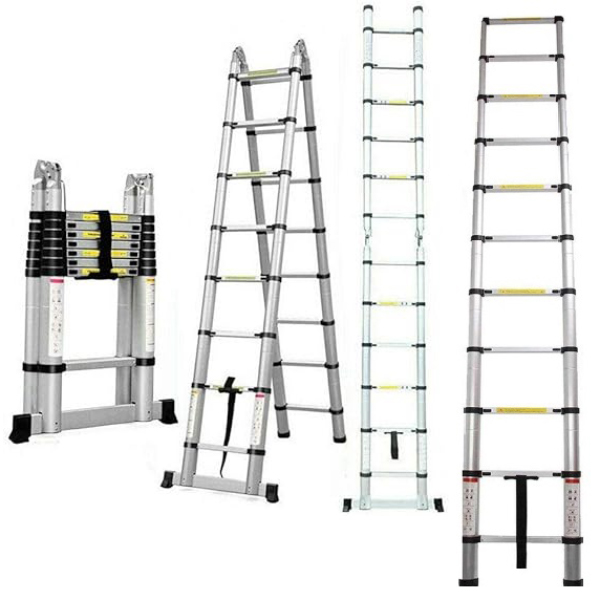
When browsing options like those in the Extension Ladders at M Industrial Safety, you’ll find ladders, as per your need and, making it easier to select based on your work environment and specific use case.
If you're frequently transporting your ladder or moving between job sites, aluminum may be the better choice due to its lightweight construction. On the other hand, if you're working around power tools or electricity, fiberglass should be your go-to material for maximum safety.
Every ladder comes with a duty rating, which indicates how much weight it can safely hold. The rating includes your body weight, plus the tools and materials you're carrying. Here's a quick breakdown:
Type III (Light Duty): Up to 200 lbs – For household or occasional light tasks
Type II (Medium Duty): Up to 225 lbs – For painters, light repairs, and indoor tasks
Type I (Heavy Duty): Up to 250 lbs – Suitable for contractors and maintenance crews
Type IA (Extra Heavy Duty): Up to 300 lbs – Ideal for industrial use and heavier loads
Type IAA (Special Duty): Up to 375 lbs – For professional contractors with heavy gear
Choosing a ladder with a suitable duty rating ensures that the equipment can handle the weight without risking collapse or damage. Overloading a ladder—even just once—can weaken its structure permanently.
Even the best ladder isn’t safe if it’s damaged or used improperly. Always inspect your ladder before each use:
Check for cracked rungs, missing feet, or loose bolts
Ensure locking mechanisms and rung locks are functioning properly
Clean off any oil, grease, or mud that could cause slipping
Set up on a flat, stable surface away from doorways or high-traffic areas
Use ladder stabilizers or anti-slip mats if you're on uneven ground
If you're unsure where to find ladders that meet these safety standards, M Industrial Safety offers a trusted selection tested for durability and UK compliance. Their range includes ladders built with robust materials and safety-tested components.
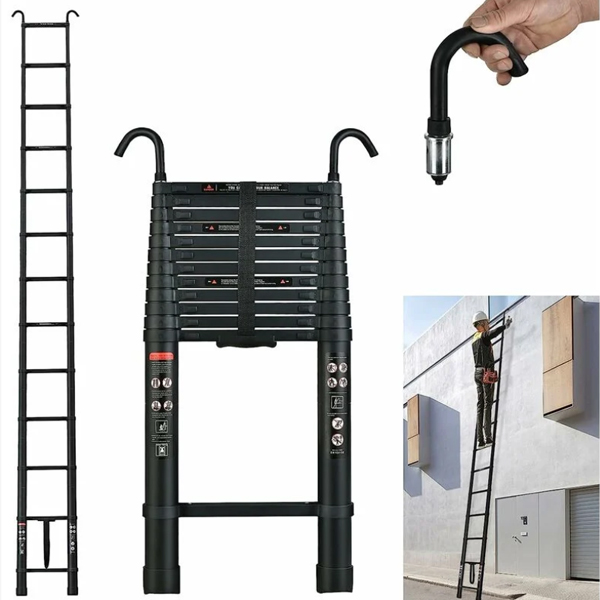
Modern extension ladders often come with features that increase safety and usability:
Stabilizer bars for better balance and reduced wobble
Slip-resistant feet to prevent sliding during use
Rope and pulley systems for easier extension without strain
Leveling feet or adjustable legs for working on slopes or stairs
These features are especially useful when working on sloped surfaces, uneven ground, or around landscaping. They also make the job quicker and less physically demanding.
The extension ladders collection at M Industrial Safety includes models equipped with many of these enhancements, making them ideal for both DIY users and professionals who prioritize safety and comfort.
Where you use your ladder also matters. For indoor use, consider ladders that:
Have non-marking rubber feet to protect tile, wood, or vinyl flooring
Are easy to store and move through doorways or stairwells
Provide enough reach for ceilings, light fixtures, and attic access
For outdoor or construction work, you'll want ladders with:
Weather-resistant coatings to handle rain, UV, and corrosion
Higher duty ratings to carry heavy tools or building materials
Telescopic or multi-position designs for uneven terrain and variable heights
Fiberglass is generally the better choice for prolonged outdoor use, especially in wet or windy conditions. Aluminum, while lighter, may not perform as well in harsh weather.
Choosing the right extension ladder isn't just a technical decision—it’s a safety decision. By understanding your height needs, selecting the correct material, checking duty ratings, and prioritizing essential safety features, you can reduce risks and work more efficiently on any project.
Whether you're managing home repairs or working at a professional job site, using the right ladder will make your work faster, safer, and more effective. Always follow inspection protocols, set up your ladder correctly, and invest in models that are compliant with national safety standards.
With a wide range of certified extension ladders available through trusted suppliers like M Industrial Safety, you can easily find a model that fits your job, environment, and budget.
Stay safe, climb smart!

M Industrial Safety UK supplies reliable, high-quality safety and industrial products for workplaces across the UK. From PPE and safety footwear to site and industrial equipment, we provide compliant solutions designed to protect people and support professional environments. With a focus on quality, reliability, and customer service, we help businesses stay safe, efficient, and compliant — every day.
At a glance:
4 October 2026
Many industries depend on Hot tapping services in the UAE to repair, modify, or expand pipelines wit
24 July 2026
Construction sites have always generated waste. Offcuts of timber, broken bricks, plasterboard, conc
13 July 2026
Be the first to share your thoughts
No comments yet. Be the first to comment!
Share your thoughts and join the discussion below.








.webp&w=3840&q=75)
.webp&w=3840&q=75)