* All product/brand names, logos, and trademarks are property of their respective owners.
Workplace accidents can happen quickly, especially when floors become wet, dusty, uneven, or heavily used throughout the day. A small slip near an entrance, a fall in a warehouse aisle, or a loss of balance in a busy workshop can lead to injuries, downtime, damaged equipment, and avoidable disruption.
For employers, safety teams, and site managers, reducing these risks often starts with the floor itself. Anti-slip rubber matting provides a practical way to improve grip underfoot, support safer movement, and make high-risk areas easier to manage. It is not a replacement for good housekeeping or proper safety procedures, but it can play an important role in creating a safer working environment.
Workplace slips and falls often result from everyday hazards that are easy to overlook. Wet floors, spills, dust, grease, mud, and uneven surfaces can quickly reduce traction and increase the risk of accidents.
In busy environments, employees are often carrying items, operating equipment, or moving quickly between tasks. When combined with slippery surfaces, these conditions can significantly increase the likelihood of workplace injuries.
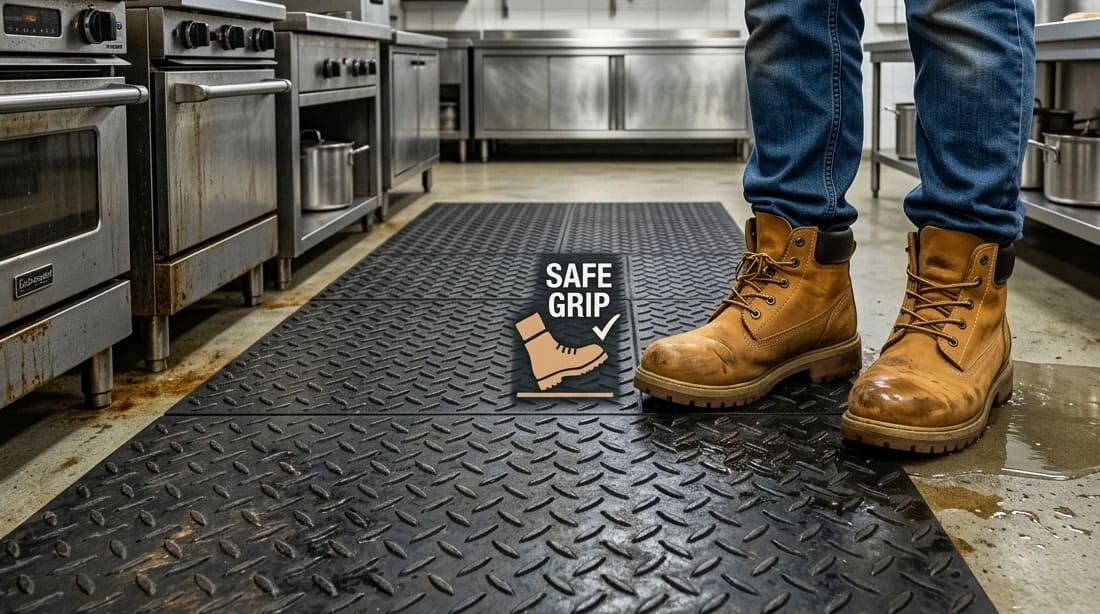
Anti-slip rubber matting is designed to increase traction and create a more secure walking surface in areas where slips are likely to occur. Its textured surface helps improve grip, reducing the chance of employees losing their footing on wet, dirty, or frequently used floors.
One of the main advantages of anti-slip matting is its ability to provide a consistent grip. This is particularly valuable in entrances, production areas, workshops, and other locations where moisture or debris can accumulate throughout the day.
Many rubber matting products feature drainage holes or raised patterns that help move water and liquids away from the walking surface. This reduces standing moisture and helps maintain safer conditions. In addition, the matting protects underlying floors from wear, helping businesses maintain safer surfaces over time.
In workplaces where staff spend long periods standing, rubber matting can also provide a cushioning effect. Improved underfoot comfort may help reduce fatigue, allowing employees to move more confidently during their shifts.
Businesses looking to strengthen floor safety measures often invest in quality anti-slip Rubber Matting for areas exposed to moisture, heavy foot traffic, and demanding working conditions.
Different working environments face different safety challenges, but many share a common risk: slippery or unstable flooring. Anti-slip rubber matting can help improve safety in a wide range of commercial and industrial settings.
Warehouse floors often experience constant foot traffic, pallet movement, and equipment use. Dust, moisture, and packaging materials can create slipping hazards, making reliable floor traction essential.
Manufacturing environments frequently involve liquids, oils, and heavy machinery. Rubber matting can provide extra grip in operational areas while helping employees maintain a stable footing throughout the working day.
Tools, lubricants, and regular movement increase the likelihood of spills and surface contamination. Anti-slip matting creates a safer walking surface and can help reduce accident risks in busy work zones.
Food preparation areas are particularly vulnerable to wet and greasy floors. Rubber matting can assist with drainage and traction, helping staff move more safely during peak operating hours.
Rainwater, mud, and dirt brought in from outside can quickly make entranceways slippery. Proper matting helps capture moisture and improve grip for both employees and visitors.
Retail premises and loading areas often experience a combination of pedestrian traffic, stock movement, and changing weather conditions. Anti-slip surfaces can support safer movement and reduce the likelihood of avoidable slips and falls.
Not all anti-slip rubber matting is designed for the same environment. Choosing the right product can improve safety, durability, and long-term performance while helping to reduce workplace hazards.
High-quality rubber matting is better equipped to withstand daily wear, heavy foot traffic, and demanding workplace conditions. Durable materials are less likely to deteriorate quickly, helping maintain consistent slip resistance.
The required thickness will often depend on the environment. Areas exposed to heavy equipment, trolleys, or continuous use may benefit from thicker matting that provides additional stability and protection.
Different surface designs offer varying levels of traction. Raised patterns, textured finishes, and anti-slip profiles can improve grip and help employees move more safely across the workspace.
Workplaces exposed to water, oils, or other liquids should consider matting with drainage features. Effective drainage helps minimise standing liquids and reduces the risk of slippery surfaces.
Regular cleaning plays an important role in maintaining workplace safety. Selecting matting that is easy to clean and maintain can help businesses keep floors in a safer condition throughout the year.
Indoor and outdoor environments often require different types of matting. Exposure to weather, moisture, temperature changes, and chemicals should be considered before making a final decision.
Choosing matting based on the specific risks present in the workplace can help businesses create a safer environment and support ongoing accident prevention efforts.
A. Yes. It improves traction and helps lower the risk of slips and falls in busy work environments.
A. Yes. Many options are designed to maintain grip in areas exposed to water and moisture.
A. Yes. Industrial-grade matting is built for demanding environments and frequent use.
Preventing workplace accidents requires a combination of good safety practices, regular maintenance, and suitable flooring solutions. Slips and falls remain among the most common workplace hazards, particularly in environments exposed to moisture, debris, heavy foot traffic, and demanding daily operations. Anti-slip rubber matting offers a practical way to improve traction, support safer movement, and create more secure working conditions across a wide range of industries. From warehouses and factories to commercial kitchens and entrances, the right matting can help reduce risks while contributing to a safer and more efficient workplace.
By assessing workplace hazards and selecting matting that matches the specific environment, businesses can take a proactive step towards improving safety and reducing the likelihood of avoidable accidents.

UK writer Evan covers home improvement, construction, and lifestyle trends, sharing practical insights for readers.
Planning Kitchen Renovations Sydney homeowners can be proud of requires more than choosing stylish c
19 June 2026
Wall corners take more impact than most people realise. In busy UK homes, offices, schools, hospital
1 June 2026
Cotton webbing is one of those practical materials that quietly improves everyday life at home. It&r
18 February 2026
Be the first to share your thoughts
No comments yet. Be the first to comment!
Share your thoughts and join the discussion below.







.webp&w=3840&q=75)


.webp&w=3840&q=75)