* All product/brand names, logos, and trademarks are property of their respective owners.
In the fast-paced world of commercial and industrial operations, managing waste efficiently isn’t just a box to tick — it’s a necessity. Whether it’s a bustling warehouse, a manufacturing unit, or a large-scale construction site, the volume and type of waste generated can be intense. And while it might be easy to overlook, the quality of your waste management products — especially the bags and bins — plays a massive role in ensuring cleanliness, safety, and compliance.
Imagine a busy factory floor where sharp debris or chemical waste is part of the daily routine. Using thin, flimsy trash bags can lead to leaks, tears, and even potential hazards for your team. And in environments where regulations around hygiene and disposal are strict, a single failure in your waste system could cost you more than just a mess — it could mean penalties or operational downtime.
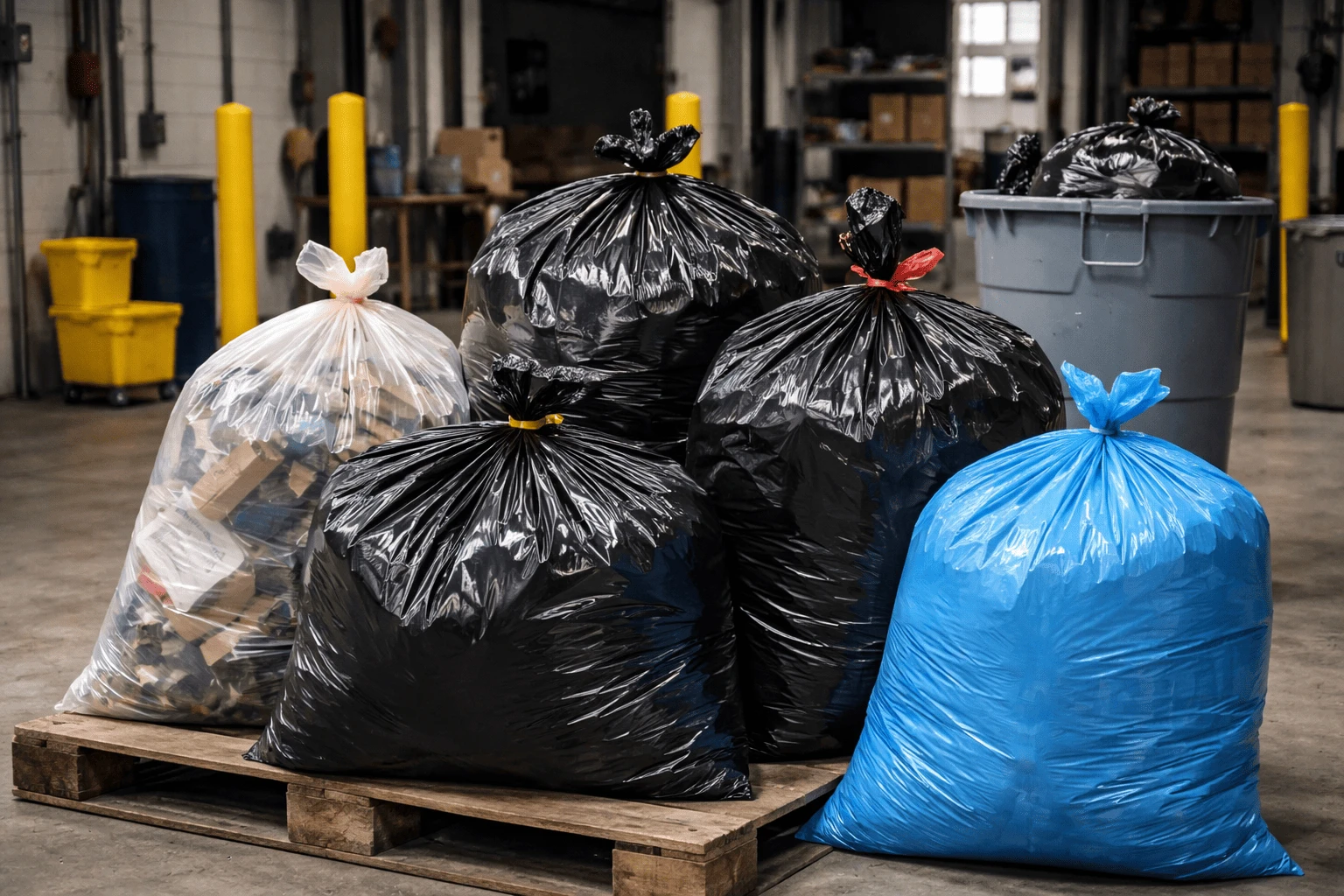
Heavy-duty waste bags and bins are designed to take on these high-stress environments. They aren’t your average garbage containers. They’re engineered with reinforced materials, high tensile strength, and the durability needed to handle everything from construction rubble to industrial waste fluids. More than just a container, they’re an investment in maintaining workflow efficiency and protecting worker safety.
Commercial and industrial environments produce waste that’s far from ordinary. We're not talking about office paper or food wrappers — we're dealing with sharp metal shavings, heavy debris, broken materials, chemical residue, and sometimes even hazardous components. This type of waste requires a completely different level of durability when it comes to disposal solutions.
Unlike standard household garbage, industrial waste can be jagged, corrosive, or extremely heavy. Trying to manage that with thin, low-quality trash bags or bins is like using a toy shovel to move gravel — it simply doesn’t work. That's why businesses operating in construction sites, warehouses, manufacturing facilities, or large retail settings need to prioritize heavy-duty waste solutions built for the task.
Using weak or ill-fitted waste bags and bins can lead to a chain of serious problems. A torn bag might not sound like a big deal — until it spills sharp objects across a work floor, posing safety risks and halting operations. Worse, if the waste contains chemicals or other hazardous materials, a spill can cause environmental or legal issues, too.
There’s also the issue of workplace hygiene and morale. Overflowing or broken bins give off the impression of disorganization and neglect, which can affect how clients view your business and how employees feel about their environment.
Investing in industrial-grade waste bags and bins helps prevent these issues by offering consistent, reliable performance — even under intense conditions.
When choosing waste bags for commercial or industrial use, one of the first things to look at is material strength. Typically, heavy-duty bags are made from HDPE (High-Density Polyethylene) or LDPE (Low-Density Polyethylene). HDPE bags are more rigid and resistant to punctures, making them ideal for sharp or heavy waste. LDPE bags, on the other hand, offer more flexibility and stretch, better suited for bulky but less hazardous trash.
Your bag is only as good as the bin it’s paired with. A high-capacity waste bag won’t be effective if it constantly slips inside a bin or tears from poor alignment. That’s why compatibility between bags and bins is crucial. Many industrial bins come with liner-retaining features or locking lids to secure bags in place and reduce spillage.
If your facility deals with wheeled bins or mobile waste units, make sure the bags are compatible with the movement and load-bearing capacity. Durability isn’t just about thickness — it’s also about how well the bag holds up under regular handling, including lifting, dragging, and disposal.
| Feature | Details |
|---|---|
| Material Type | - HDPE: Rigid, puncture-resistant - LDPE: Flexible, stretchable |
| Bag Thickness (Gauge) | - Measured in mils - Ideal range: 2–6 mils for industrial use |
| Capacity / Size | - Standard sizes: 20-1100 Liters - Choose based on daily waste load |
| Tear & Puncture Resistance | - Essential for sharp or heavy waste - Reinforced seams improve durability |
| Bin Compatibility | - Bags should match bin size & shape - Look for liner locks or anti-slip grips |
| Mobility Considerations | - For wheeled bins, use stretchable or high-load bags |
| Use Case Suitability | - Choose bag type based on specific waste: liquids, chemicals, debris, etc. |
You can find a wide selection of bins and bags specifically designed for industrial demands in the Bins & Bags category at M Industrial Safety. They stock options built to withstand high-volume, high-impact waste environments.
Every industry has unique waste disposal needs. Construction sites often deal with broken bricks, nails, and other sharp materials — requiring bags that are puncture-resistant and reinforced. On the other hand, food processing units or warehouses may handle liquids, which calls for leak-proof liners to prevent messes and odors.
One-size-fits-all doesn't apply here. For example, if your waste includes heavy, wet materials, choosing a thinner bag can lead to catastrophic spills. Businesses should assess the type, volume, and weight of their waste output before selecting their supplies.
Knowing the nature of your waste stream helps avoid overpaying for heavy-duty products when not needed — or worse, under-buying and risking workplace safety.
Selecting the right bin goes hand-in-hand with choosing the right bag. In large-scale environments, like factories or distribution centers, bins need to be strategically placed at high-traffic or high-waste zones. This reduces unnecessary movement and improves workflow.
Size matters too — bins that are too small will overflow quickly, while overly large bins in tight areas may cause clutter or safety hazards. Look for features like wheeled mobility, lockable lids, and weather-resistant builds if your setup is outdoors or in variable conditions.
Looking for tailored waste solutions? M Industrial Safety offers a complete lineup of heavy-duty waste bins and bags suited for all types of industrial operations.
In industrial and commercial settings, waste management isn’t just about keeping the area tidy — it’s about ensuring efficiency, safety, and compliance. Using the right waste bags and bins can prevent spills, reduce downtime, and even improve the overall hygiene and workflow of your workspace.
Heavy-duty solutions are built for environments that demand more than what standard trash products can handle. From handling sharp construction debris to containing chemical waste, investing in the right tools makes all the difference.
As industries evolve and safety standards grow tighter, businesses that proactively upgrade their waste systems are already one step ahead. Don’t let low-quality materials slow down your operation or put your team at risk. Choose products that match the strength and reliability your business stands for.

M Industrial Safety UK supplies reliable, high-quality safety and industrial products for workplaces across the UK. From PPE and safety footwear to site and industrial equipment, we provide compliant solutions designed to protect people and support professional environments. With a focus on quality, reliability, and customer service, we help businesses stay safe, efficient, and compliant — every day.
The industrial diesel engine is commonly found in construction equipment, generators, agricultural e
18 August 2026
Workplace safety has come a long way over the past few decades, and one area that has seen major imp
18 August 2026
When you walk into any major concert event today, the first thing that hits you is the visuals. You
11 August 2026
Be the first to share your thoughts
No comments yet. Be the first to comment!
Share your thoughts and join the discussion below.
.webp&w=3840&q=75)








.webp&w=3840&q=75)
.webp&w=3840&q=75)