
* All product/brand names, logos, and trademarks are property of their respective owners.
At a glance:
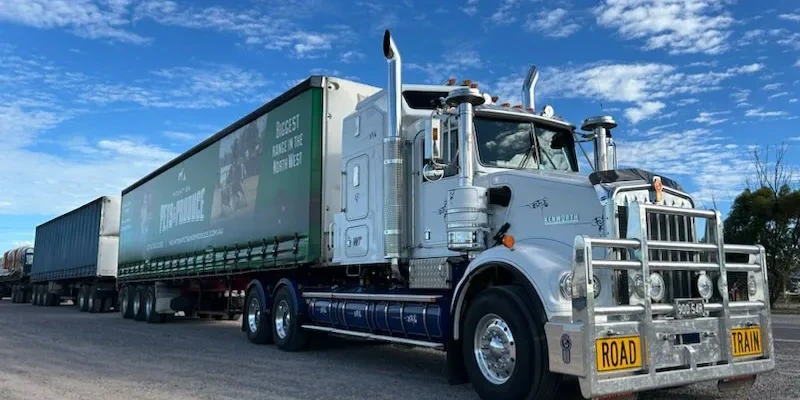
With so many heavy haulage companies operating across Australia, working out which provider can actually handle your complex or oversized load is not always straightforward.
Heavy haulage sits apart from standard freight. Moving oversized cargo requires larger vehicles, engineered route planning, permits and tighter safety controls, all of which call for a specialised heavy haulage service.
Choosing an inexperienced provider can lead to delays, compliance issues, load damage, site access problems or unexpected costs. Whether you are moving mining equipment, construction plants, or other oversized cargo, you need the right heavy haulage transport partner. Here are five practical tips to help you choose a heavy haulage provider with confidence:
Not every heavy haulage company has the background to move oversized, overmass or high-value cargo. Before committing, ask how much heavy haulage transport work they have completed and whether it involved loads similar in size, weight and complexity to yours. A provider used to standard freight may not have the judgement needed for a specialised move.
Checking past projects or case studies involving comparable cargo, such as mining equipment or construction plants, gives you a clearer picture of what to expect. Some reliable heavy haulage providers publish their heavy haulage case study projects by project, showing exactly how comparable loads were engineered and delivered.
Experienced providers tend to manage site access, timing and loading risks more smoothly, since they have already worked through similar challenges on previous projects.
Evaluate whether the service has the equipment required for your specific load. Heavy haulage projects often require specialised trailers, movers and lifting equipment, and this can vary considerably between providers.
Typical equipment to ask about includes:
Having the right combination in place supports load stability and proper weight distribution throughout transport. Without it, you risk damage, delays or unsafe handling on the road, particularly with heavier or irregularly shaped freight.
Oversized and overmass loads often require permits, notices and access approvals through the National Heavy Vehicle Regulator (NHVR) and relevant state or territory road authorities. A provider experienced in heavy haulage in Australia should understand these requirements well and manage the paperwork without guesswork.
Permit errors can lead to delays, fines, rejected routes or disruption late in a project. Ask upfront how the provider handles approvals and documentation, so the process is under control before the load is ready to move.
Permit requirements also differ from state to state, and can include additional conditions for night-time travel windows, pilot and escort requirements, or notification of superload movements. A provider with genuine NHVR experience will walk you through these specifics rather than treat permits as a formality.
A dependable company should assess the route in detail before transport begins, accounting for bridges, road widths, turning space, overhead clearances, gradients and restricted areas. It is also important to confirm whether your load will require pilot vehicles, escorts, traffic management or travel during approved time windows.
Effective planning extends beyond the initial route assessment. Find out how the provider manages unexpected situations such as road closures, adverse weather or last-minute site access changes.
Having clear contingency plans in place helps protect your load, other road users and site personnel while reducing the risk of unnecessary delays.
The lowest quote may not offer the best overall value. Hidden exclusions can become clear once the project is already underway. Confirm whether the price includes permit applications, pilot vehicles or escorts where required, route surveys, insurance and contingency planning or whether these are added later as separate costs. A provider who omits these details up front often recovers the difference through delays or project downtime once unexpected issues arise.
The best heavy haulage service becomes clear once quotes are compared on what is included rather than price alone. Look for a detailed breakdown of what is included and a realistic timeline that accounts for permits and route conditions. The provider should also be able to explain how the load will be moved safely and legally, rather than simply confirming that it can be done.
Selecting the right heavy haulage company in Australia comes down to more than finding an available truck. It means evaluating a provider's track record, equipment, permit handling and approach to safety and contingency planning. Reliable heavy haulers treat these as standard practice, not afterthoughts, and asking the right questions before booking is the simplest way to avoid costly delays or unexpected costs on your next project.
Before booking your next heavy transport move, it is worth speaking with a specialist heavy transport provider in Australia who understands the equipment, permits and planning your load requires.

Many industries depend on Hot tapping services in the UAE to repair, modify, or expand pipelines wit
24 July 2026
Construction sites have always generated waste. Offcuts of timber, broken bricks, plasterboard, conc
13 July 2026
Modern construction and industrial projects require materials that are reliable, adaptable, and capa
9 February 2026
Be the first to share your thoughts
No comments yet. Be the first to comment!
Share your thoughts and join the discussion below.





.webp&w=3840&q=75)
.webp&w=3840&q=75)

.webp&w=3840&q=75)
.webp&w=3840&q=75)