
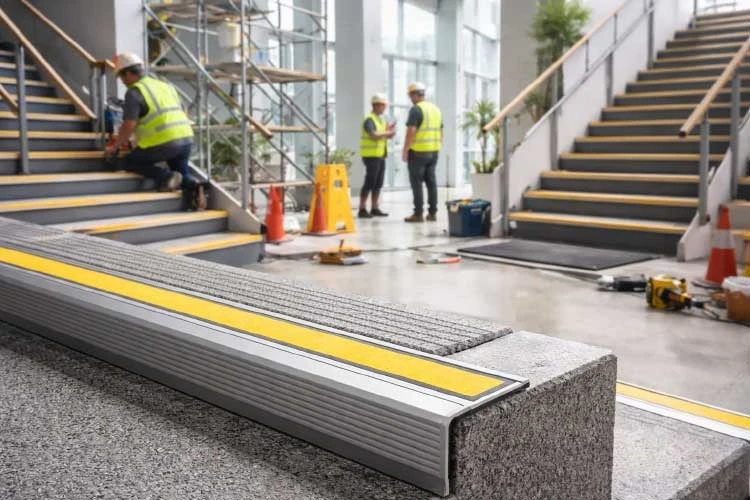
* All product/brand names, logos, and trademarks are property of their respective owners.
Modern commercial spaces are no longer designed with functionality alone in mind. Today, offices, shopping malls, hospitals, hotels, and public buildings are expected to deliver a safe, comfortable, and visually appealing experience for everyone who walks through them. From wide open lobbies to multi-level interiors, staircases play a bigger role than most people realize. They are used daily by employees, visitors, and customers, making them a key part of both building safety and everyday lifestyle.
For builders, architects, and property managers, choosing the right stair solutions is about more than meeting construction standards. It’s about creating spaces that feel reliable, modern, and welcoming in high-traffic conditions. For everyday users, it’s about moving confidently through public places without even thinking about safety features working behind the scenes.
In busy commercial environments, safety is not a luxury—it’s a daily necessity. Places like office buildings, shopping centers, hospitals, and transport hubs see hundreds, sometimes thousands, of people moving through staircases every day. With such constant foot traffic, stair edges are one of the most vulnerable areas in any building. Without proper protection, they can quickly become worn, slippery, and unsafe.
From a construction and building management point of view, stair nosing also helps extend the life of staircases. Constant foot traffic can quickly damage unprotected stair edges, leading to costly repairs and visual deterioration. Builders and facility managers increasingly rely on modern commercial stair solutions that combine durability with safety, ensuring staircases remain functional and presentable even under heavy daily use.
Commercial buildings are no longer designed in isolation from lifestyle trends. Modern architecture focuses on clean lines, open layouts, and user-friendly spaces that feel intuitive to navigate. Staircases, once seen as purely functional, are now part of the overall design language of a building. This is where modern stair nosing solutions fit naturally into both construction planning and everyday experience.
Today’s stair nosing options are designed to blend seamlessly with contemporary interiors. Slim profiles, neutral finishes, and subtle textures allow them to support safety without disrupting the visual flow of a space. In offices and retail environments, especially, this balance between form and function helps create interiors that feel polished and professional while still being practical.
Builders and architects increasingly recognize that small details can shape how a space feels to use. Stair nosing, when chosen correctly, becomes part of a broader lifestyle-driven approach to building design—one that values safety, comfort, and aesthetics equally.
One of the biggest trends in commercial construction today is the move toward materials that can handle constant use without compromising on safety or appearance. In high-traffic environments such as offices, shopping centers, schools, and healthcare facilities, stair nosing must withstand daily wear while continuing to perform its core function. This is why durable, heavy-duty materials have become a top priority for builders and facility managers.
Aluminum stair nosing, in particular, has gained popularity due to its strength, corrosion resistance, and low maintenance requirements. These qualities make it suitable for buildings where staircases are used continuously throughout the day. Slip-resistant inserts and textured finishes further enhance safety, especially in areas prone to moisture or frequent cleaning. From a lifestyle standpoint, these materials support smoother, worry-free movement through public spaces, helping people focus on their day rather than potential hazards.
Modern suppliers now offer solutions that balance performance with long-term value. Platforms like Commercial Stair Nosing provide a wide range of options designed specifically for demanding commercial environments, making it easier for construction professionals to select products that align with both safety standards and real-world usage. Within their Commercial Nosing collections, builders can find solutions tailored for busy staircases where durability and reliability are essential. These kinds of choices reflect how modern construction increasingly prioritizes user experience alongside structural performance.
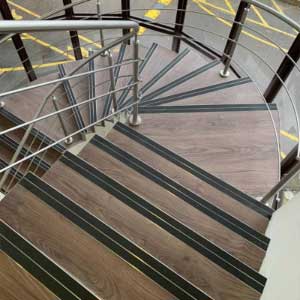
Alongside durability, visual simplicity has become a defining trend in commercial stair nosing. Modern buildings often feature minimalistic interiors with neutral colors, open layouts, and streamlined finishes. Stair nosing is now designed to complement this aesthetic rather than stand out as a purely functional add-on.
For builders and developers, this trend highlights a broader shift in construction thinking. Stair nosing is no longer just about meeting minimum requirements; it’s about selecting solutions that align with modern living, urban design, and the everyday expectations of people using these spaces.
For builders and construction professionals, selecting stair nosing is a decision that goes beyond appearance. In commercial projects, staircases must meet safety regulations, withstand long-term use, and remain easy to maintain. These practical considerations strongly influence material choices and installation methods, especially in buildings designed for heavy daily foot traffic.
Compliance with safety standards is often the starting point. Slip resistance, edge visibility, and secure fitting all play a role in reducing accident risks in public spaces. Builders prefer solutions that clearly support these requirements without adding unnecessary complexity to the project. At the same time, durability is essential. Stair edges that chip, crack, or wear down quickly can lead to repeated repairs and disruptions in active commercial environments.
Longevity and low maintenance are also key factors. In offices, hospitals, and retail buildings, maintenance work can interrupt normal operations. Modern stair nosing solutions are designed to minimize this issue by using materials that resist wear and are easy to clean. This approach benefits not only building owners but also everyday users, who experience safer and more reliable spaces over time.
What makes stair nosing especially relevant to lifestyle-focused spaces is how directly construction decisions affect daily life. A product chosen during the building phase becomes part of thousands of everyday movements—employees heading to meetings, shoppers browsing different floors, patients navigating healthcare facilities, or students moving between classes.
Builders increasingly look to specialized suppliers such as Commercial Stair Nosing when planning commercial projects because these platforms focus on solutions built specifically for real-world use. Their Commercial Nosing ranges support construction projects where safety, durability, and modern design must work together. By integrating these solutions into staircases, construction teams help create environments that feel secure, professional, and comfortable for the people who use them every day.
Commercial stair nosing may seem like a small detail, but its impact on modern commercial spaces is significant. As buildings become busier and lifestyle expectations continue to rise, the need for stair solutions that balance safety, durability, and design has never been greater. From high-traffic public buildings to contemporary office interiors, stair nosing supports smoother movement and protects both people and structures in everyday use.
As commercial buildings continue to shape daily routines and urban living, thoughtful construction details will remain essential. Stair nosing, when selected with care, becomes part of a smarter approach to building—one that quietly supports safety and enhances the overall experience of modern commercial life.
For projects where safety and durability matter, high-quality commercial stair nosing plays a crucial role in reducing slips while enhancing stair edge visibility.

We are a UK-based supplier of stair nosing, wall corner protection, door thresholds, skirting boards, and interior finishing profiles for commercial and residential projects. We provide durable, safety-focused solutions for high-traffic environments, supplying quality products to contractors, architects, and property professionals across the UK.
At a glance:
4 October 2026
Many industries depend on Hot tapping services in the UAE to repair, modify, or expand pipelines wit
24 July 2026
Construction sites have always generated waste. Offcuts of timber, broken bricks, plasterboard, conc
13 July 2026
Be the first to share your thoughts
No comments yet. Be the first to comment!
Share your thoughts and join the discussion below.









.webp&w=3840&q=75)
.webp&w=3840&q=75)