
* All product/brand names, logos, and trademarks are property of their respective owners.
When it comes to maintaining a safe, efficient, and comfortable industrial or commercial environment, the importance of high-quality rubber products cannot be overstated. From warehouse floors to catering kitchens, the right rubber solutions help reduce wear and tear while enhancing overall workspace performance.
Rubber products are used across a wide variety of sectors in the UK, including manufacturing, logistics, hospitality, and retail. Whether it's reducing worker fatigue, improving floor grip, or dampening vibrations from heavy equipment, these solutions provide both practical and safety-focused benefits. Choosing wisely involves selecting materials and products that can handle the specific demands of your industry rather than just focusing on cost.
In this blog, we break down four essential categories of rubber products — Anti-Fatigue Mats, Rubber Floor Tiles & Mats, Rubber Matting, and Rubber Pads — exploring core functions, quality indicators, and practical use cases in UK workplaces.
Rubber products are more than just a practical flooring choice — they play a vital role in improving the health, safety, and productivity of employees. In environments where staff spend long hours standing or walking on hard surfaces, rubber-based solutions reduce strain, slips, and long-term injuries.
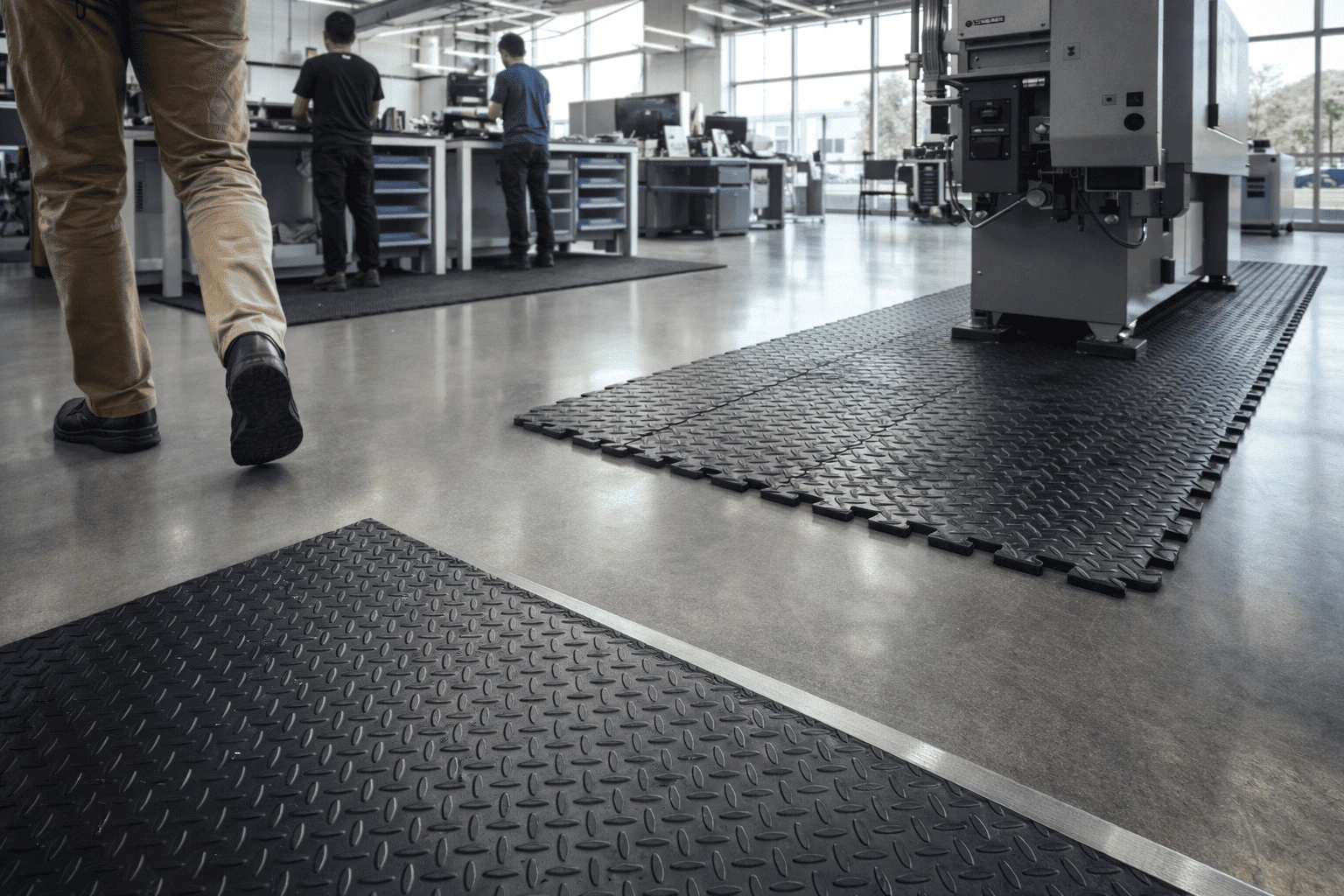
Anti-fatigue mats with ergonomic designs, such as diamond-pattern surfaces or striped layouts, are commonly used in manufacturing lines and packing stations to alleviate physical stress. These features contribute to fewer breaks, lower absenteeism, and improved staff morale. Beyond worker comfort, rubber flooring and accessories enhance operational safety. Their anti-slip properties and resistance to oils, chemicals, and abrasions make them ideal for high-traffic or messy industrial environments. From wet entrance areas to production floors, rubber-based surfaces provide consistent traction and long-lasting durability.
In the UK, industrial rubber products should ideally comply with certifications like BS EN ISO 9001 or be REACH compliant, ensuring both safety and quality. Specifications such as load-bearing capacity, heat resistance, and expected lifespan under daily stress are key indicators of a product’s suitability for demanding environments. In mission-critical workplaces, these factors directly impact productivity and maintenance costs.
Anti-fatigue mats vary widely in composition. Foam mats are soft but less durable, rubber mats offer a stronger, slip-resistant base suitable for tough industrial conditions, and PVC blends provide a middle ground of flexibility and resilience.
Rubber-based fatigue mats perform best in settings where durability, hygiene, and anti-slip properties are critical. Mats with interlocking open-cell structures or weld-resistant surfaces are often chosen for assembly lines or workshops. These designs protect against debris, heat, and long-term compression. Industrial mats are designed to withstand heavy foot traffic and provide long-lasting durability. Ribbed or domed surfaces enhance grip and comfort, helping reduce fatigue during long shifts. Selecting mats that meet safety standards and hygiene requirements ensures a safer, more efficient workplace.
In warehouse zones, anti-fatigue mats reduce muscle strain for pickers and packers. In commercial kitchens, they function as drainage mats while offering comfort and slip resistance. Retail environments also benefit, particularly behind service counters where staff stand for extended periods. Many facilities rely on high-quality Rubber Products to provide both comfort and durability in these high-traffic areas. Visual safety elements, such as contrasting edges or textured surfaces, improve visibility and traction, while wear-resistant materials support both heavy- and lighter-duty zones, including workstations and service counters.
Rubber floor tiles are ideal for flexible installations. Interlocking formats allow for modular assembly and easy replacement, making them suitable for gyms, loading bays, or workshops with irregular layouts.
Tiles with contrasting black and yellow edges provide visual zoning, while anti-slip textures maintain safe footing. Their resistance to spills and ease of maintenance make them valuable in dynamic environments where cleanliness and safety go hand-in-hand.
In specialized settings like laboratories or electronics assembly areas, anti-static mats dissipate static build-up, protecting sensitive equipment and preventing electrical interference. Rubber floor mats designed for these environments often combine low-resistance surfaces with slip-resistance and cushioning, balancing human safety with equipment protection.
Rubber matting is critical in entrances, kitchens, and workshop wash zones. Mats with honeycomb or open-cell designs allow fluids and dirt to pass through, maintaining traction for foot traffic and keeping surfaces safer and drier.
These mats are suitable for both temporary and permanent setups, from catering backrooms to outdoor thresholds. Their durability and moisture resistance make them reliable in areas with frequent cleaning and high footfall.
Texture improves slip resistance. Bubble, dotted, or diamond patterns enhance surface friction, reducing the risk of falls in wet or greasy zones. Rubber matting rolls with these surfaces can be cut to size or laid loosely under machinery or along workbenches, offering flexibility for both fixed installations and temporary use.
Although often overlooked, rubber pads are crucial for reducing machinery vibration, sealing components, and resisting oils and chemicals. From under-machine isolation to gasket lining, their function supports equipment performance and workplace safety.
Pads made from nitrile-bonded cork are commonly used for oil resistance and vibration dampening. In high-pressure sealing situations, CNAF (compressed non-asbestos fibre) pads provide long-term stability. Selecting pads with appropriate material properties ensures machinery stays aligned and protected from excessive wear, particularly in high-load or high-frequency settings.
Pads are supplied in A3, A4, or A5 sizes for flexibility across machinery types. Shotblast pads are built for abrasive environments, while gasket papers offer clean, adaptable options for sealing systems where precision and oil resistance are essential. These small-format rubber components, though subtle, reduce downtime, improve machine lifespan, and help operations run smoothly.
High-quality rubber products play a vital role in improving safety, efficiency, and durability across industrial and commercial environments. From flooring systems that reduce worker fatigue to protective components that help safeguard machinery, industrial rubber matting for commercial and workplace settings is widely used to support daily operations in practical, measurable ways.
By understanding real-world applications, performance expectations, and material properties across different use cases — including anti-fatigue mats, impact-resistant flooring, and sealing pads — facilities can make informed decisions aligned with operational and compliance requirements. Prioritising durability and suitability not only extends product lifespan but also contributes to a safer, more productive workplace, as outlined by specialists at therubbermats.uk.

UK writer Evan covers home improvement, construction, and lifestyle trends, sharing practical insights for readers.
The industrial diesel engine is commonly found in construction equipment, generators, agricultural e
18 August 2026
Workplace safety has come a long way over the past few decades, and one area that has seen major imp
18 August 2026
When you walk into any major concert event today, the first thing that hits you is the visuals. You
11 August 2026
Be the first to share your thoughts
No comments yet. Be the first to comment!
Share your thoughts and join the discussion below.

.webp&w=3840&q=75)








.webp&w=3840&q=75)
.webp&w=3840&q=75)