
* All product/brand names, logos, and trademarks are property of their respective owners.
On a busy UK construction site, every step matters — especially when it's wet, muddy, or cluttered. Slips, trips, and falls are among the most common causes of workplace injuries, with the Health and Safety Executive (HSE) reporting that slips and trips account for over 33% of non-fatal injuries in construction each year. Many of these accidents are preventable with proper floor safety planning and the right matting solutions.
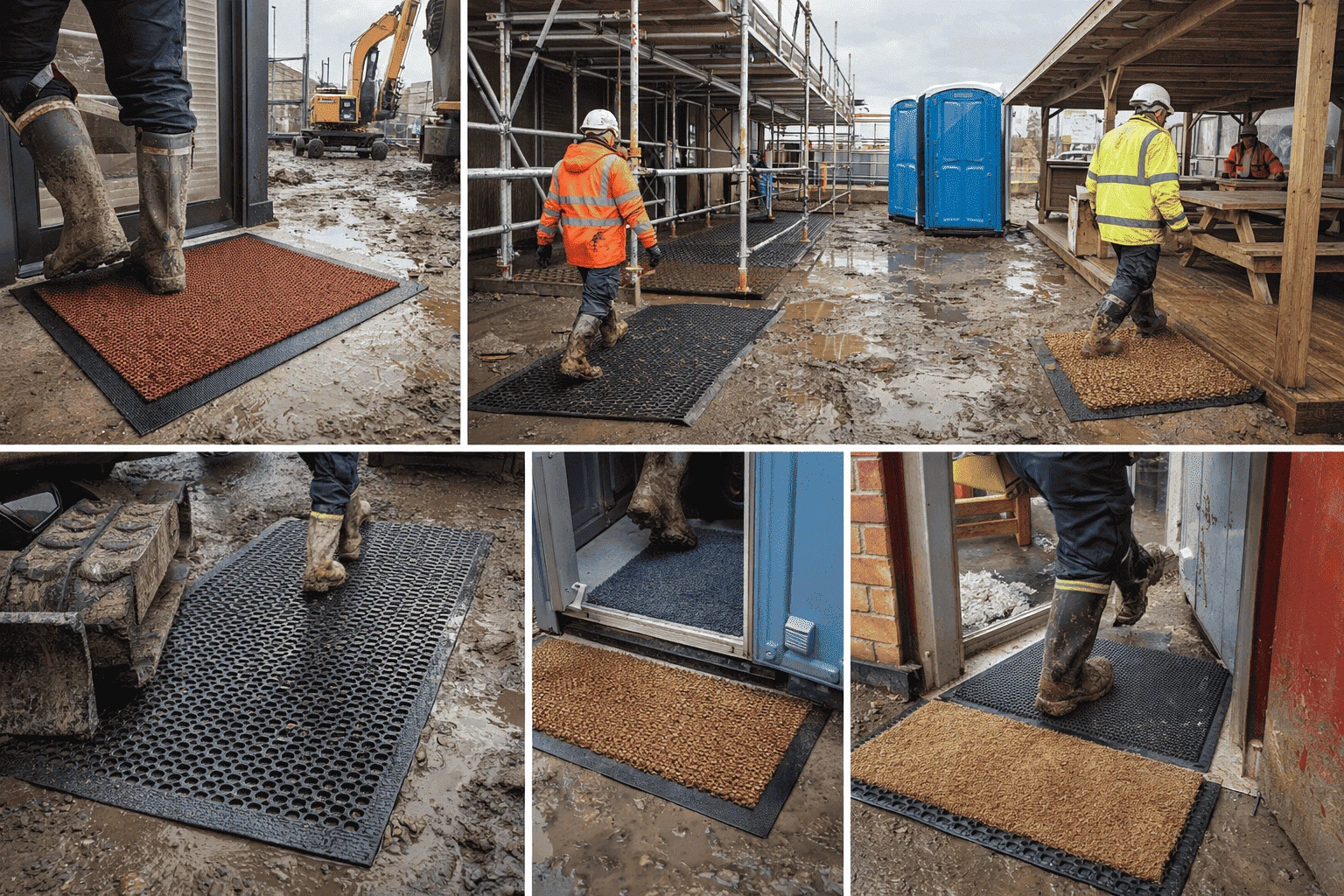
From site entrances to scaffolding walkways, portable loos to break areas, every zone comes with its own floor safety challenges. Not all mats are created equal, and different environments require specific features to maintain grip, absorb moisture, and withstand wear. This guide explores how to choose the right anti-slip mat for each high-risk area, considering materials, slip ratings, surface textures, and practical site use.
Common high-risk flooring zones on UK building sites include:
Site Entrances & Exits – Often exposed to rain, mud, and debris tracked in by boots and wheels. Without proper matting, these become instant slip zones.
Walkways & Scaffolding Access Points – High-traffic routes between zones, especially over uneven ground or temporary flooring like plywood.
Rest Areas & Portacabins – Where clean flooring meets dirty boots, such as site kitchens, staff rooms, and office entries.
Portable Toilets & Washrooms – Wet floors are inevitable here; water, condensation, and foot traffic combine to create hidden risks.
Machinery & Tool Zones – Leaks, oil, and fine debris can build up on floors around mixers, saw stations, or fuel stores, reducing surface grip quickly.
According to the UK Health and Safety Executive (HSE):
Slips, trips, and falls accounted for 33% of non-fatal construction site injuries in 2022/23.
The average cost of a slip-related injury, including lost labour, administration, and medical care, exceeds £1,600.
Most slips occur during wet conditions or transitional weather, not just during heavy rain.
This highlights the importance of strategically placing suitable anti-slip matting in high-risk areas.
Industrial areas face high pressure from both foot traffic and wheeled tools or machinery. Mats for these zones need to be durable, grippy, and easy to clean.
Ideal zones: loading areas, around generators, mixing stations, scaffold entry points.
Subtle examples include mats designed for frequent transitions between indoor and outdoor settings, with strong backing and high traction surfaces. Products within the industrial mats category are typically engineered to handle heavy use while maintaining surface grip, highlighting features that are useful when selecting mats for construction zones. Other mats in this category may include textured designs for soft or uneven ground, and absorbent mats for wet or debris-prone areas.
Site entrances are where dirt, moisture, and debris are first tracked in, creating slippery internal floors and surface wear.
Ideal zones: portacabins, access gates, office doors.
Subtle examples include mats designed for water drainage and anti-slip backing, providing practical guidance for areas where moisture accumulation is common.
Indoors, matting helps control moisture, absorb fine debris, and reduce ongoing cleaning.
Ideal zones: kitchenettes, staff rooms, corridors, entrances.
Non-promotional examples include mats that are compact, easy to clean, or water-absorbent, suitable for moderate to high-traffic indoor areas.
Coir mats are naturally hardwearing and ideal for semi-covered zones.
Ideal zones: scaffold entries, cabin porches, side gates.
These mats provide durable coverage in areas exposed to dirt and moderate weather, helping maintain safe footing without requiring constant maintenance.
Slips are common in temporary washrooms and portable loos.
Ideal zones: welfare facilities, shower units, trailers.
Examples include mats with textured surfaces, quick-dry properties, and non-slip backing, supporting safer movement in wet zones.
In the UK, slip resistance is commonly measured using:
R-Ratings (DIN 51130): Range from R9 to R13; R13 offers the highest slip resistance.
PTV (Pendulum Test Value): A PTV of 36+ is recommended for wet areas.
Mats should meet at least R11 for general site zones and R12–R13 for wet or oily zones.
Entrance mats: at least 1.5m long for effective cleaning action.
Edges: Bevelled edges reduce trip hazards.
Thickness: 9mm+ for durability, ensuring compatibility with floor height transitions.
Ribbed textures, drainage holes, or raised edges improve water and dirt management.
Rubber backing helps mats stay in place.
Quick-drying or washable surfaces support regular cleaning and consistent performance.
A commercial build in Leeds experienced multiple minor slips during a wet March, most common at:
Site office entrance
Toilet facilities
Walkways over soft ground
By placing appropriate mats in high-risk zones, such as durable barrier mats for scaffold routes, gripper-backed entrance mats, and absorbent bath mats near toilets, the site observed:
A 70% reduction in slip incidents
Improved morale and safer walking conditions
Reduced administrative time spent tracking safety issues
This illustrates the practical value of matching mat types to specific site zones based on risk.
Construction sites present diverse hazards, from wet and muddy entrances to areas around machinery and temporary walkways. Understanding these risk zones and the characteristics of different mat types can significantly reduce slips, trips, and falls. Key considerations include slip ratings, durability, thickness, drainage, and backing. Attention to these details helps maintain safer walkways, reduces cleaning effort, and ensures consistent performance in challenging conditions.
Safety planning is most effective when focused on zones, surface conditions, and daily use patterns. Selecting mats with the appropriate properties for each area — whether entrance mats, industrial mats, or bath mats — supports a proactive safety culture and contributes to a more efficient workflow. For readers seeking more guidance on durable and versatile matting for construction and commercial settings, comprehensive resources are available at therubbermats.uk.

UK writer Evan covers home improvement, construction, and lifestyle trends, sharing practical insights for readers.
At a glance:
4 October 2026
Many industries depend on Hot tapping services in the UAE to repair, modify, or expand pipelines wit
24 July 2026
Construction sites have always generated waste. Offcuts of timber, broken bricks, plasterboard, conc
13 July 2026
Be the first to share your thoughts
No comments yet. Be the first to comment!
Share your thoughts and join the discussion below.










.webp&w=3840&q=75)
.webp&w=3840&q=75)