
* All product/brand names, logos, and trademarks are property of their respective owners.
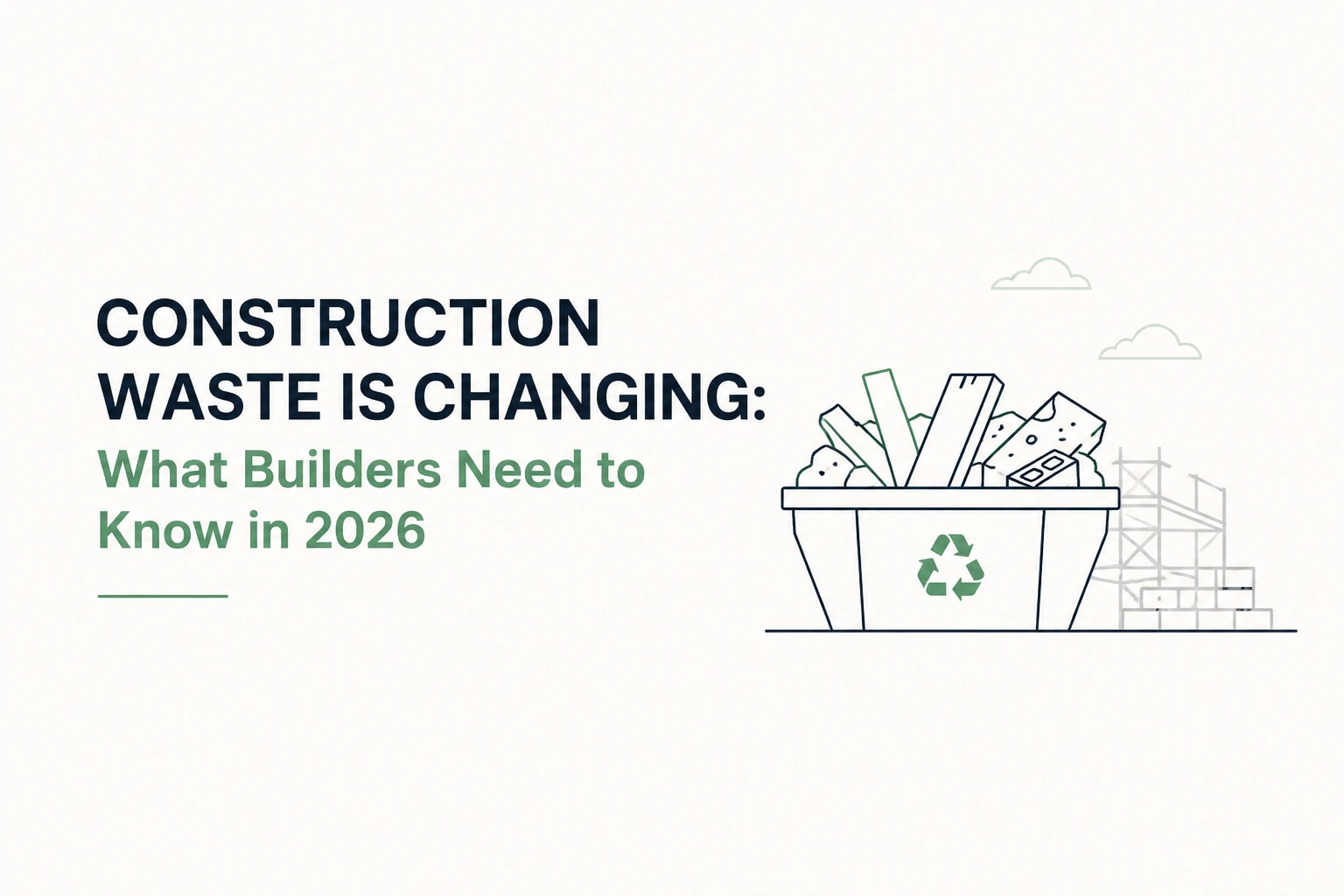
Construction sites have always generated waste. Offcuts of timber, broken bricks, plasterboard, concrete, packaging, insulation, and metal are part of almost every project. What has changed over the last few years isn't the waste itself; it's how builders are expected to manage it.
Today, clients expect cleaner worksites. Material prices continue to make waste reduction more important than ever, and sustainability has become a normal part of residential and commercial construction discussions. At the same time, builders are looking for ways to improve efficiency without adding unnecessary costs.
Construction waste management is no longer something to think about at the end of a project. It starts during planning and continues until the final cleanup.
Here are the most important changes builders should understand in 2026 and how they can adapt without disrupting their workflow.
Many builders focus on scheduling trades, ordering materials, and arranging deliveries. Waste management is often left until demolition begins or the site starts filling with debris.
That approach usually creates unnecessary problems.
Without a waste plan, materials end up scattered around the site, reusable items become damaged, and valuable working space disappears much sooner than expected.
A simple waste management plan doesn't need to be complicated. Before work starts, consider:
Answering these questions early helps avoid last-minute decisions that often cost both time and money.
Years ago, many construction sites placed everything into a single container.
That approach is becoming less practical.
Different materials have different recycling opportunities, and separating waste during the project is much easier than trying to sort everything afterwards.
Common construction waste includes:
Even separating only a few of these materials can improve recycling rates and reduce contamination.
The key isn't creating a perfect recycling system. It's creating one that's simple enough for every subcontractor to follow.
Clearly labelled disposal areas usually work better than complicated instructions.
Construction waste isn't just an environmental issue.
It's also a productivity issue.
Offcuts left in walkways slow down workers. Packaging accumulates around delivery areas. Overflowing waste piles force trades to spend time moving debris before they can begin their own work.
Small delays happen every day.
Over an entire project, they become significant.
Builders who schedule regular site cleanups often notice benefits beyond appearance:
Good housekeeping supports both safety and efficiency.
Construction materials have become more expensive over recent years.
Every unused sheet of plasterboard, damaged door, or incorrectly cut timber represents money that cannot be recovered.
Reducing waste begins with smarter purchasing rather than better disposal.
Some practical approaches include:
Waste prevention will almost always save more than recycling alone.
The cheapest waste is the waste that was never created.
Demolition often produces the largest volume of waste during renovation projects.
However, not everything removed from a building belongs in landfill.
Many materials may still have value, including:
Planning selective demolition rather than rushing through removal can make it easier to recover reusable materials.
This approach also reduces the total amount of waste requiring disposal.
Many builders assume that using the largest available waste container is always the best option.
In reality, regular collections often work better.
Large overflowing bins can create access problems, reduce working space, and encourage poor waste separation.
Scheduling collections throughout the project helps maintain an organised site and keeps waste under control before it becomes an obstacle.
This approach is particularly useful on residential projects where space is limited.
Construction projects involve multiple trades working across different stages.
Without clear communication, one contractor may accidentally dispose of materials another intended to keep.
Simple communication can prevent unnecessary waste.
Examples include:
These small actions reduce confusion and help everyone follow the same process.
Digital tools are gradually changing how construction waste is managed.
Builders increasingly use project management software to schedule waste collections, record deliveries, organise subcontractors, and document disposal activities.
Photos taken throughout the project also provide useful records of site conditions before and after waste removal.
Digital documentation helps improve accountability and creates a clearer project history without adding significant administrative work.
Homeowners and commercial clients are paying more attention to how projects affect the environment.
They increasingly ask questions such as:
Builders who can confidently answer these questions demonstrate professionalism and planning.
Sustainability is no longer viewed as an optional extra. For many clients, it's part of choosing the right contractor.
Construction waste management doesn't require expensive systems or complicated procedures.
Small improvements often produce the biggest results.
Consider these practical habits:
Consistent habits usually outperform complicated systems that nobody follows.
Construction waste will always be part of the building industry, but how it's managed continues to evolve.
Builders who treat waste management as part of project planning, not simply the final cleanup, often experience smoother workflows, cleaner sites, better resource use, and improved client satisfaction.
The biggest opportunity isn't simply disposing of waste more efficiently.
It's creating less waste in the first place.
As construction methods continue to improve, builders who plan, communicate clearly, and keep their sites organised will be well positioned for the years ahead.

At a glance:
4 October 2026
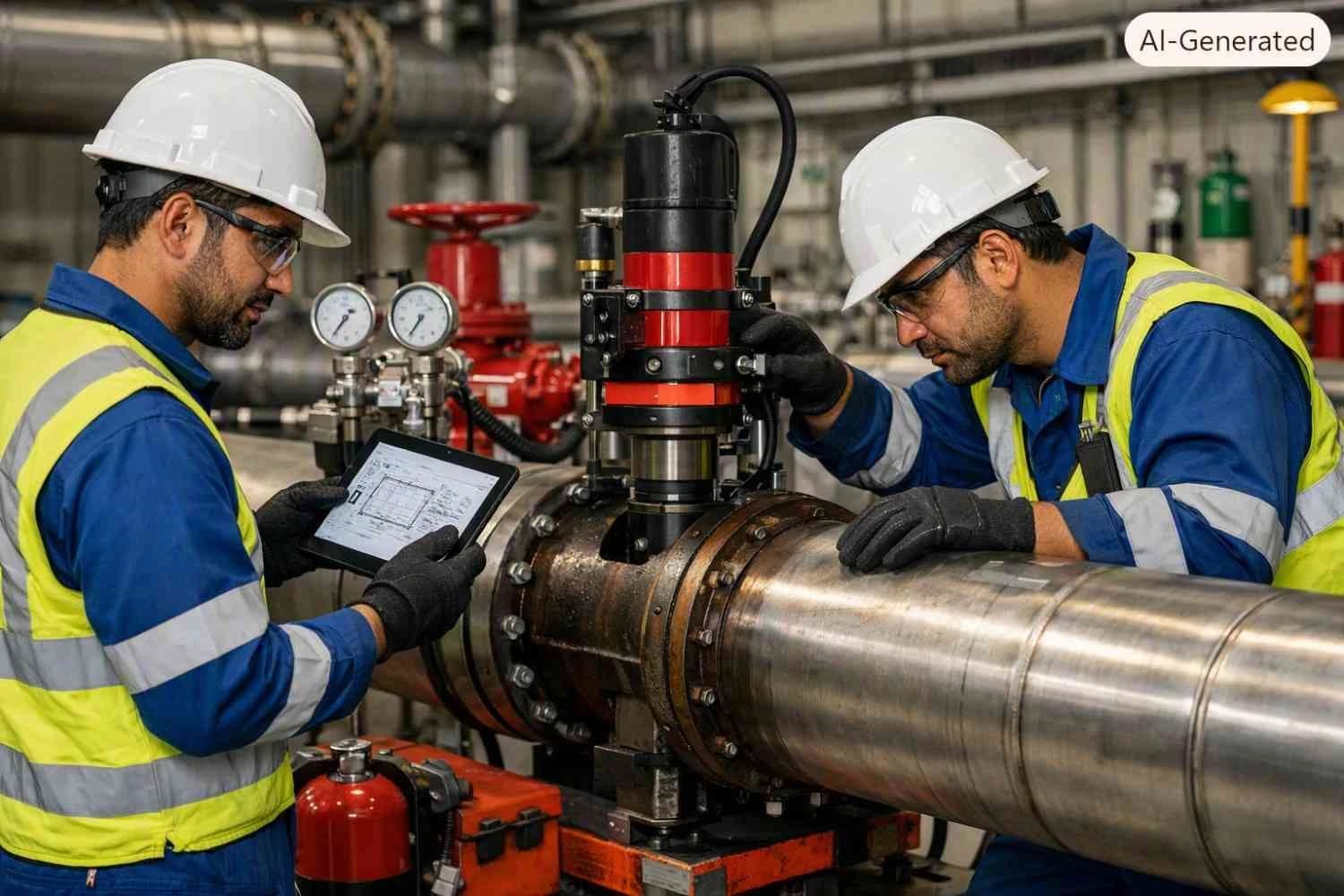
Many industries depend on Hot tapping services in the UAE to repair, modify, or expand pipelines wit
24 July 2026
Modern construction and industrial projects require materials that are reliable, adaptable, and capa
9 February 2026
Be the first to share your thoughts
No comments yet. Be the first to comment!
Share your thoughts and join the discussion below.









.webp&w=3840&q=75)
.webp&w=3840&q=75)