.webp)
* All product/brand names, logos, and trademarks are property of their respective owners.
At a glance
In mining, workforce training often competes with production for access to equipment, scheduling space, and experienced personnel.
VR training moves early-stage and repeatable practice away from live machinery, keeping production assets available for production work.
VR training modules reduce pressure on supervisors by shifting basic familiarisation into simulation, allowing coaching to focus on final readiness.
Performance data from VR training can support Verification of Competence (VOC) by helping training teams decide when employees are ready for live-plant exposure.
Training and production have always competed for the same equipment and people in mining operations. A haul truck or loader used for training is not moving material, and those hours add up across a roster. Shutdown windows are usually too tight for the practical learning employees need, while supervisors can be pulled from productive work to repeat basic explanations.
Classroom training covers procedures and safety requirements, but it rarely builds the hands-on familiarity your workforce needs before stepping onto a live site.
Virtual reality (VR) training changes where early capability is built. Difficult, repeatable, and high-risk tasks can move into controlled simulation, allowing employees to practise before live machinery is involved and without consuming equipment hours, shutdown time or experienced-supervisor time.
The following points show how mining operations can build workforce capability without repeatedly compromising production.
The first trade-off is direct: skill-building has often required the same machinery needed for production. A new operator learning a haul truck, or a maintenance employee working through diagnostics, has traditionally relied on live plant, taking that equipment away from material movement.
Mobile plant VR training breaks that link by recreating haul trucks, loaders and other heavy equipment in a controlled simulation environment. Employees can practise repetition-heavy tasks, including pre-start checks, servicing steps, fault recognition and diagnostic logic, before they reach a live machine. They can repeat sequences until the task is second nature, without booking equipment or putting unnecessary wear on real assets.
For that practice to transfer, simulations should be built from your site procedures, equipment specifications and subject-matter expert input, so your employees rehearse the exact task logic and hazard cues they will face on site.
The live fleet stays in production, and hours once spent on basic familiarisation return to moving material.
Equipment is not the only thing training and production compete over. Timing matters just as much. On a live site, training often has to fit whatever gap the schedule leaves, whether that is a shutdown window, a quieter shift or a machine that happens to be free. Those windows rarely align with onboarding schedules, refresher cycles or employee readiness, so training gets delayed, compressed or squeezed into gaps where it is least effective.
Industrial VR training reduces that scheduling pressure. A scenario can run on demand across shifts and locations without waiting for a shutdown, machine booking or quiet production period. Training can be scheduled around rosters, onboarding intakes and refresher cycles rather than equipment availability. Because the scenario is repeatable, employees receive the same practice each time.
For remote and multi-site operations, scenarios can run on headsets or via computer-based delivery, removing the need to bring employees to a central facility.
The production benefit is straightforward: more of your workforce gets trained without downtime increasing to match. Workforce development is no longer capped by the amount of equipment access, shutdown time or schedule space the operation can spare.
Equipment and scheduling are not the only pressures. Supervisors and experienced employees are critical operational resources, and training pulls heavily on both.
VR training modules absorb the repetitive part of that load. Basic familiarisation moves into simulation, where employees work through early tasks independently. Supervisors are not removed from the process; they are freed from having to narrate the same steps every time.
That changes what supervision is used for. Instead of covering the basics with every employee, supervisors can focus on task execution, site-specific hazards, judgement under pressure and final readiness for live work. Their time shifts to where it adds the most value, rather than being spent on repetitive explanation.
The production effect follows. Less time from experienced employees is spent on basic instruction, so more of it stays with the work the operation depends on, without slowing how quickly new employees build capability.
The real cost emerges when employees reach live plant before they are ready. An operator still unsure of a sequence, or a maintenance employee without diagnostic confidence, ends up learning on the machine. That is where rework, equipment damage, unplanned downtime and extra supervisor intervention can occur. That is not just lost training time; it is the production lost correcting avoidable errors made on live equipment.
Unlike a classroom sign-off, VR training captures actual performance data. As employees work through simulated tasks, the system records step accuracy, procedure sequencing, hazard recognition and fault response. This gives training teams evidence of whether an employee can perform the task under realistic conditions, not just whether they completed the instruction.
That data can support VOC. Your training team can review how each employee handled the task in simulation, identify remaining gaps and decide when live exposure is appropriate based on defined criteria.
Live machinery can then be used for final validation rather than trial-and-error learning. Employees reach live plant with stronger readiness evidence, while production-critical assets are protected from avoidable disruption.
Building early capability in simulation protects production availability, keeps training outside tight scheduling windows and ensures live-plant exposure is timed to readiness rather than schedule convenience.
The approach extends beyond induction. The same modules can support selection assessments, refresher cycles and re-familiarisation when equipment or procedures change, making capability development part of normal operations rather than a recurring interruption.
That depends on the simulation reflecting real conditions. You can partner with a VR training provider to develop modules based on actual equipment, site procedures and operating environments, so what your employees practise in simulation transfers directly to the live plant.

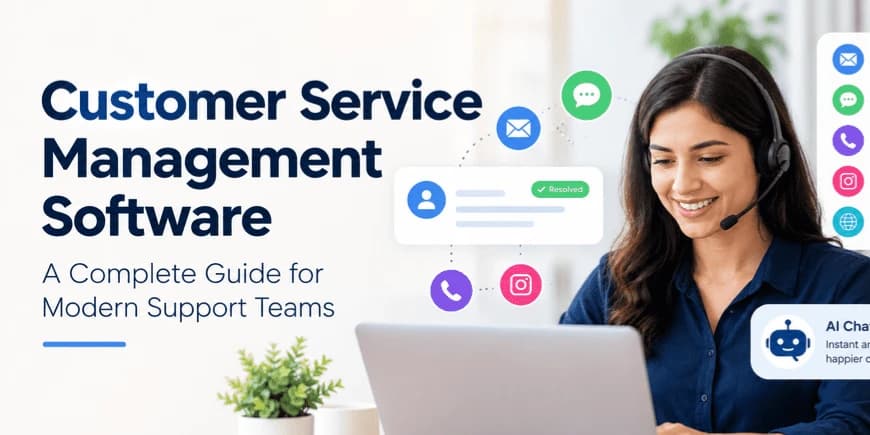
Customer expectations have changed significantly with the growth of digital communication. People wa
8 October 2026
At a glance
5 October 2026
At a Glance
5 October 2026
Be the first to share your thoughts
No comments yet. Be the first to comment!
Share your thoughts and join the discussion below.
.webp&w=3840&q=75)
.webp&w=3840&q=75)



.webp&w=3840&q=75)