* All product/brand names, logos, and trademarks are property of their respective owners.
Packaging often shapes a customer's first impression before they even see the product inside. The colors, materials, design, and way a box opens can influence how people perceive a brand. For businesses launching new products or reaching out to media professionals, creators, and influencers, this first interaction can become a valuable part of the marketing experience.
The most effective approach does not always require elaborate designs or expensive extras. Instead, it combines practical construction, consistent branding, and details that make receiving a product feel worthwhile.
Product launches often involve sending samples to journalists, content creators, reviewers, and other people who can introduce a brand to new audiences. In these situations, packaging becomes part of the product presentation.
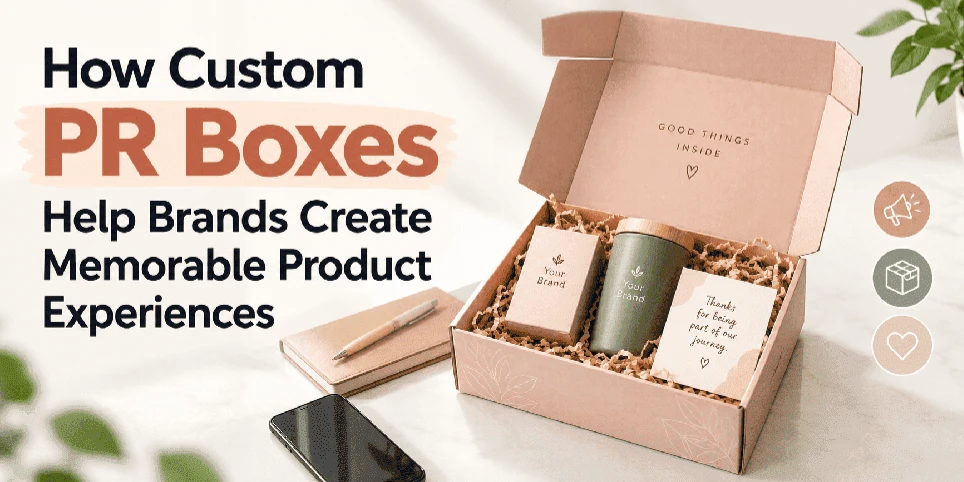
Wholesale custom packaging PR boxes can help businesses create a consistent and appealing presentation for promotional campaigns. The box structure, printed graphics, interior arrangement, and protective inserts all contribute to how the recipient experiences the package.
For example, a skincare brand might arrange its new products with clear labels and a short introduction explaining the collection. A technology company could use fitted inserts to keep accessories organized and protected.
These details help recipients understand what they have received and why the products matter. While attractive packaging cannot guarantee media coverage or social shares, it can make the initial interaction more engaging and memorable.
Unboxing videos, product photography, and first impressions are common formats for online content. Packaging that looks distinctive and presents products clearly can give creators an appealing starting point for their content.
Custom PR boxes wholesale options can help businesses maintain a consistent appearance when preparing promotional packages for multiple recipients. Matching colors, recognizable design elements, and organized product placement make it easier to present a campaign as a cohesive brand experience.
However, visual appeal should support the product rather than distract from it. Packaging that is difficult to open, unnecessarily bulky, or filled with excessive materials may frustrate recipients instead of encouraging them to share the experience.
Brands should consider how their boxes will look in photographs, how easily products can be removed, and whether the presentation communicates the intended message without requiring lengthy explanations.
Packaging provides a physical space for businesses to express their personality. Typography, colors, graphics, finishes, and structural choices can communicate whether a brand aims to feel luxurious, playful, minimalist, innovative, or environmentally conscious.
Custom printed PR boxes allow businesses to incorporate these visual elements into their promotional packaging. A premium beauty brand, for instance, might prefer restrained colors and a clean layout, while a youthful lifestyle brand could choose brighter graphics and more expressive typography.
Consistency matters more than following every design trend. When packaging aligns with a company's website, product labels, and other marketing materials, customers and media recipients have a clearer picture of the brand.
A recognizable design also helps promotional materials feel connected across different campaigns. Over time, these repeated visual cues can support brand recognition without relying on excessive logos or complicated decoration.
A thoughtful package does not need to be expensive to feel meaningful. Small details, such as a personalized note, a clear product guide, or a carefully arranged selection of items, can make recipients feel that the package was prepared with purpose.
Businesses often use custom PR boxes with a logo to combine this personal touch with consistent branding. The logo establishes recognition, while the accompanying message explains the reason for the package or introduces a new product collection.
For influencer outreach, a short note might explain the inspiration behind a product launch. For a media campaign, an information card could provide product specifications and relevant contact details.
Personalization works best when it is relevant to the recipient and easy to understand. Adding unnecessary inserts or generic promotional messages may increase packaging costs without improving the experience.
An attractive package has limited value if the products arrive damaged. PR boxes must withstand handling, transportation, and storage while keeping their contents secure.
The right packaging depends on the products being shipped. Fragile glass containers may need fitted inserts or cushioning, while lightweight accessories might require a sturdy mailer with secure internal compartments.
Businesses evaluating custom packaging or boxes should consider the product's weight, dimensions, fragility, shipping distance, and expected handling conditions. Material thickness, closure design, and internal support should all be selected accordingly.
It is also worth testing a sample package before placing a large order. Checking how easily the box opens, whether items move during transit, and how the exterior holds up can reveal practical problems before a campaign begins.
Not every promotional campaign requires hundreds of packages or a major product launch. A business might send samples to a small group of industry contacts, introduce a seasonal collection, or prepare a limited campaign for selected creators.
Custom Printed Boxes can help businesses maintain a recognizable presentation across different promotional activities. By using a consistent design system, companies can adapt the contents of each package without rebuilding the entire concept for every campaign.
For example, the same basic box design might accommodate a single product for a targeted outreach campaign and a larger product assortment for a launch event. The internal layout can change while the external branding remains consistent.
Before ordering, businesses should compare minimum order quantities, production lead times, customization options, and per-unit costs. Wholesale orders may offer lower unit prices, but ordering more packaging than a campaign requires can tie up budget and storage space.
The right order size depends on realistic campaign needs rather than price per box alone.
Packaging decisions increasingly involve questions about material use, recyclability, and waste. Businesses can consider these factors without sacrificing product protection or presentation quality.
Depending on the product and supplier, options may include recyclable paperboard, corrugated cardboard, paper-based inserts, or other materials suited to the intended use. The best choice depends on durability requirements, local recycling facilities, product safety, and the packaging's complete material composition.
A responsible approach starts with avoiding unnecessary layers, oversized boxes, and decorative elements that serve little purpose. Right-sizing a package can reduce wasted space and may also help manage shipping costs.
Businesses should verify environmental claims with their packaging suppliers rather than assuming that a material is recyclable, compostable, or sustainably sourced in every location.
Thoughtful material choices can support a brand's values while keeping the packaging functional and visually appealing.
Packaging consistency can simplify campaign planning, especially when businesses coordinate outreach across different regions, product categories, or recipient groups.
A standardized PR box design gives marketing teams a repeatable foundation. They can update product inserts, printed messages, or campaign-specific details while keeping the core packaging recognizable.
This can make production planning more straightforward and help teams maintain visual consistency across multiple shipments. It may also simplify discussions with suppliers about specifications, materials, printing requirements, and reorder quantities.
However, standardization should not eliminate useful flexibility. Packaging for a fragile product may need a different internal structure from packaging designed for clothing or promotional accessories.
The goal is to establish a dependable design framework while allowing practical adjustments for different products and campaigns.
Every interaction with a business contributes to how people perceive it. Product quality, customer communication, delivery, and packaging all play a role in shaping that experience.
Custom PR boxes can help connect these elements by presenting promotional products in a way that reflects the brand's identity and attention to detail. When the package is easy to open, the products are secure, and the information is clear, recipients can focus on what the business is introducing.
Still, packaging is only one part of a successful marketing campaign. A visually impressive box cannot replace a useful product, a relevant outreach strategy, or a clear message about why the product deserves attention.
Businesses should evaluate packaging alongside campaign objectives, recipient feedback, production costs, and the quality of the products being promoted.
Requesting a sample is particularly useful when appearance, fit, and product protection are important. A physical sample can help identify design issues that may not be obvious in a digital mockup.
Custom PR boxes can play a meaningful role in product launches, influencer outreach, and media campaigns by bringing together presentation, protection, and brand identity. They help businesses introduce products thoughtfully, maintain a consistent visual style, and create an unboxing experience that feels organized and memorable.
The strongest packaging choices are not necessarily the most elaborate. They are the ones that fit the product, communicate the brand clearly, protect the contents, and respect the campaign's budget.
By planning materials, design, order quantities, and recipient needs carefully, businesses can use promotional packaging as a practical extension of their marketing strategy rather than treating it as an afterthought.

Customer expectations have changed significantly with the growth of digital communication. People wa
8 October 2026
At a glance
5 October 2026
At a Glance
5 October 2026
Be the first to share your thoughts
No comments yet. Be the first to comment!
Share your thoughts and join the discussion below.