
* All product/brand names, logos, and trademarks are property of their respective owners.
If you drive regularly in Dubai, your vehicle's braking system is one of the most important safety features to maintain. Heavy traffic, frequent stop-and-go driving, and the region's high temperatures can all contribute to faster brake wear. Understanding the warning signs early can help you avoid expensive repairs and keep your car safe on the road. Knowing when to schedule Brake Pad Replacement is essential because worn brake pads can reduce stopping power, damage your brake rotors, and increase the risk of accidents.
Brake pads are components of your vehicle's disc braking system. When you press the brake pedal, the brake pads clamp against the brake rotors, creating friction that slows or stops your vehicle.
Since this friction occurs every time you brake, the pads naturally wear down over time. Eventually, they become too thin to function effectively and must be replaced.
Here are the most common warning signs that indicate your brake pads may need replacement.
One of the earliest signs is a high-pitched squealing sound when you apply the brakes.
Most brake pads are designed with a small metal wear indicator that produces this sound once the pads become too thin. It's your vehicle's way of reminding you it's time for an inspection.
Ignoring this warning can lead to more expensive brake repairs later.
If you hear a grinding or scraping noise, your brake pads may already be completely worn out.
At this stage, the metal backing plate may be rubbing directly against the brake rotor, causing severe damage. Continuing to drive like this can significantly increase repair costs because both the pads and rotors may need replacement.
Have you noticed your vehicle taking longer to stop than usual?
Reduced braking performance is a serious warning sign. Worn brake pads cannot create enough friction, making it harder to stop quickly during emergencies.
If your stopping distance increases, schedule a brake inspection immediately.
Many modern vehicles include brake wear sensors.
If the brake warning light appears on your dashboard, don't ignore it. While the warning can indicate several brake-related issues, worn brake pads are one of the most common causes.
Always have the braking system inspected by a qualified technician.
If you feel vibrations or pulsations through the brake pedal, your braking system may require attention.
Although warped brake rotors are often responsible, severely worn brake pads can also contribute to uneven braking performance.
A professional inspection can identify the exact cause.
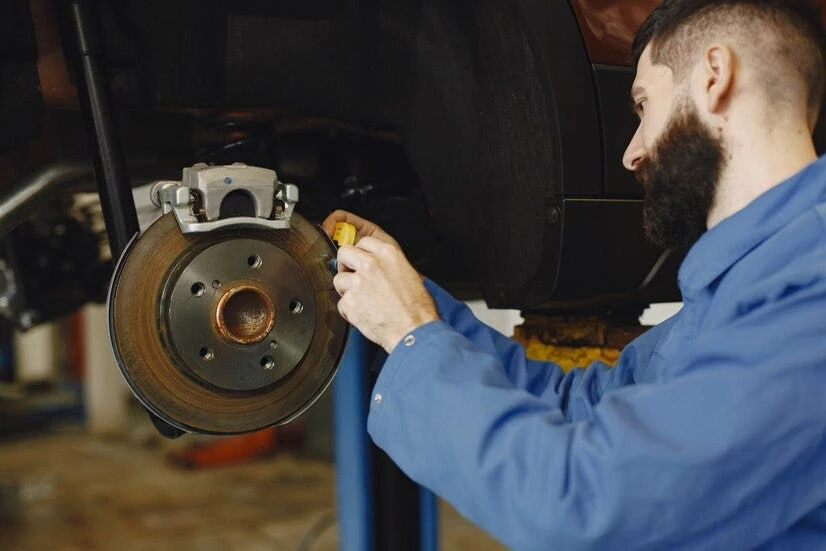
You can often inspect the brake pads visually through the wheel spokes.
Generally, if the friction material is less than about 3–4 mm thick, replacement is recommended.
If you're unsure what you're looking at, a professional brake inspection can provide peace of mind.
If your vehicle pulls left or right while braking, one brake pad may be wearing faster than the other.
Uneven brake wear can affect vehicle stability and should be addressed as soon as possible.
Brake pad lifespan depends on several factors, including:
Driving habits
Vehicle type
Road conditions
Brake pad material
Traffic conditions
In Dubai, brake pads commonly last between 30,000 and 70,000 kilometers, although aggressive driving or frequent city traffic can shorten their lifespan.
Regular inspections help identify wear before it becomes a safety concern.
Dubai's driving conditions place additional stress on braking systems.
Factors that can accelerate brake wear include:
Heavy daily commuting
Frequent traffic congestion
High outdoor temperatures
Desert dust and sand
Long highway driving followed by sudden braking
Because of these conditions, many local mechanics recommend checking your brakes during every scheduled vehicle service.
Delaying brake pad replacement can lead to several costly problems, including:
Damaged brake rotors
Reduced braking efficiency
Increased stopping distance
Higher repair costs
Risk of brake failure
Unsafe driving conditions
Replacing brake pads early is usually far less expensive than replacing an entire braking system.
A good rule is to have your brakes inspected every 10,000–15,000 kilometers or during every routine vehicle service.
You should also arrange an inspection immediately if you notice:
Strange braking noises
Vibrations
Reduced braking performance
Dashboard warning lights
Routine inspections help catch minor issues before they become major repairs.
While some experienced DIY enthusiasts replace brake pads themselves, it's generally recommended to use a qualified mechanic.
Professional technicians:
Inspect brake rotors
Check brake fluid
Test brake calipers
Ensure proper installation
Verify overall braking performance
Proper installation is critical because your braking system directly affects your safety.
You can extend the life of your brake pads by following these simple practices:
Avoid sudden hard braking whenever possible.
Maintain a safe following distance.
Reduce unnecessary heavy loads.
Drive smoothly in traffic.
Schedule regular brake inspections.
Use high-quality replacement brake pads.
These habits not only improve safety but can also reduce long-term maintenance costs.
Common signs include squealing noises, grinding sounds, longer stopping distances, dashboard brake warnings, vibrations, and visibly thin brake pads.
The cost varies depending on your vehicle make, model, and the quality of the replacement parts. Luxury vehicles typically cost more than standard passenger cars.
It's not recommended. Driving with worn brake pads can damage the brake rotors, reduce braking performance, and create serious safety risks.
Most brake pad replacements take between 30 minutes and 2 hours, depending on the vehicle and whether additional brake repairs are required.
Brake pads should generally be inspected every 10,000–15,000 kilometers or during routine servicing.
Yes. In most vehicles, the front brakes handle a greater share of the braking force, causing the front brake pads to wear more quickly.
Your vehicle's brakes are essential for safe driving, especially on Dubai's busy roads. Recognizing the early warning signs of worn brake pads—such as squealing noises, grinding sounds, reduced stopping power, or dashboard alerts—can help you avoid expensive repairs and, more importantly, keep you and your passengers safe. Regular brake inspections and timely maintenance are the best ways to ensure reliable braking performance. If you notice any of these symptoms, don't delay having your braking system checked by a trusted automotive professional.

I am a curious and hardworking individual who values personal growth, new experiences, and meaningful connections. I always aim to improve myself and take on new challenges with confidence.I am a curious and hardworking individual who values personal growth, new experiences, and meaningful connections. I always aim to improve myself and take on new challenges with confidence.
Traveling between the two holiest cities in Islam is a significant part of many pilgrims' journeys.
28 July 2026
Be the first to share your thoughts
No comments yet. Be the first to comment!
Share your thoughts and join the discussion below.

.webp&w=3840&q=75)







.webp&w=3840&q=75)