
* All product/brand names, logos, and trademarks are property of their respective owners.
Harsh industrial environments put materials under constant pressure. In UK factories, workshops, construction sites, and outdoor commercial spaces, exposure to oil, chemicals, temperature changes, and mechanical stress is part of everyday operations. When materials fail under these conditions, the impact goes beyond inconvenience—it can interrupt workflows, increase maintenance demands, and affect overall efficiency.
Rubber is widely used for sealing, cushioning, protection, and insulation, but not all rubber performs the same in demanding environments. Some types deteriorate quickly when exposed to oils or weathering, while others lose flexibility under repeated stress. Neoprene rubber sheets are valued for their ability to handle these challenges, offering a balanced combination of durability, flexibility, and resistance suited to industrial use.
Many industrial environments involve ongoing exposure to oils, greases, fuels, and chemical substances. These contaminants can cause some rubber materials to swell, soften, or lose structural integrity over time. When this happens, seals can fail, surfaces may degrade, and protective layers become less effective.
Neoprene rubber is formulated to resist many common industrial oils and chemicals. This resistance helps the material retain its physical properties, even when contact with contaminants is frequent or unavoidable. As a result, neoprene is often used in environments where material stability and consistency are essential under chemically aggressive conditions.
Not all industrial applications are indoors. Outdoor installations, semi-covered work areas, and exposed equipment must withstand rain, UV radiation, and changing temperatures throughout the year. In the UK, these conditions can vary significantly between seasons and even within short periods.
Neoprene rubber performs reliably across a wide temperature range and offers good resistance to weathering. Unlike materials that become brittle in colder conditions or degrade under prolonged UV exposure, neoprene maintains flexibility and structural integrity. This makes it suitable for environments where exposure to weather and temperature variation is unavoidable.
Heavy foot traffic, machinery vibration, repeated compression, and constant movement contribute to material fatigue. Over time, these stresses can cause cracking, deformation, or loss of cushioning in lower-grade rubber materials.
Neoprene rubber sheets are designed to absorb impact and withstand repeated mechanical stress. Their resilience allows them to recover after compression and resist cracking under load. This makes neoprene a practical option for applications where durability and extended service life are important considerations.
One of neoprene’s defining characteristics is its resistance to oils, greases, and many industrial chemicals. This property makes it suitable for use in manufacturing, engineering, and processing environments where contact with such substances is common.
By maintaining its integrity in contaminated settings, neoprene rubber helps ensure consistent performance in applications such as sealing, lining, and surface protection. This reliability can reduce the frequency of material replacement and maintenance intervention.
Neoprene rubber offers resistance to water, ozone, and UV exposure, helping to prevent premature ageing and surface cracking. These qualities are particularly valuable in outdoor or semi-exposed installations where environmental exposure is constant.
Temperature stability is another important advantage. Neoprene remains functional in both cooler and warmer conditions, reducing the risk of brittleness or excessive softening. This makes it a dependable choice for environments subject to seasonal or operational temperature changes.
Industrial materials often need to provide both strength and flexibility. Neoprene rubber sheets achieve this balance by absorbing shock and vibration while maintaining shape under repeated loading.
This combination makes neoprene suitable for applications involving movement, compression, or impact. By reducing stress transfer to surrounding components, neoprene can also contribute to improved equipment longevity and operational stability.
In industrial sealing and machinery protection applications, materials are selected based on their ability to resist oils, moisture, and repeated mechanical stress. Neoprene rubber sheets are often used in these settings because it maintains stability and flexibility under conditions where sealing performance and long-term reliability are critical.
In applications where cushioning, insulation, or vibration reduction is required, expanded neoprene sponge sheets are often used. Their cellular structure allows them to absorb shock while also providing thermal and acoustic insulation. Self-adhesive formats simplify installation in enclosed or vertical applications, making them practical for lining panels, sealing enclosures, and protecting sensitive components where mechanical fixing is not ideal.
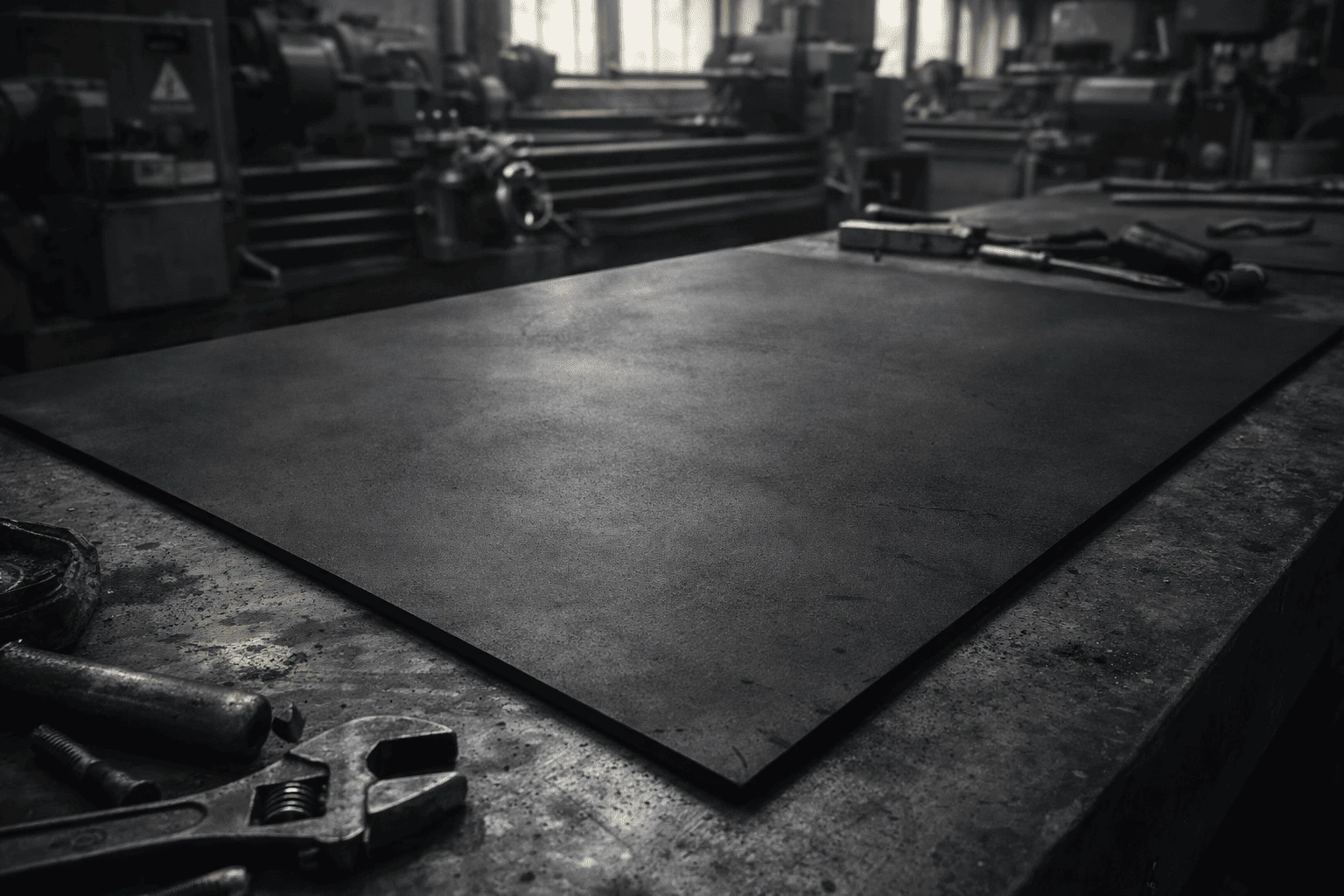
For larger surface areas, wider neoprene rubber sheets are commonly used to reduce the number of joints required. They are applied to protect work surfaces, line industrial benches, or provide durable coverage in workshops and production environments. Fewer joins can improve surface uniformity and reduce wear points, which is beneficial in high-use or high-traffic industrial settings.
Selecting the correct neoprene sheet depends on the specific demands of the application. Thicker and denser sheets are generally better suited to high-load or sealing applications, while softer, more compressible options are appropriate for cushioning, vibration control, or insulation. Considering factors such as pressure, movement, environmental exposure, and installation method helps ensure the material performs effectively over its intended service life.
Installation requirements also influence material choice. Self-adhesive neoprene sheets offer convenience and speed for light-duty or enclosed applications where repositioning is not required. Non-adhesive sheets allow for mechanical fixing or bonding, making them more suitable for heavier loads or applications where long-term permanence is necessary. Choosing the appropriate format supports both performance and installation efficiency.
Reliability is a key consideration for industrial operators. Neoprene rubber sheets are valued for their ability to perform consistently in environments where exposure and mechanical stress are unavoidable. By reducing premature material failure, neoprene helps limit maintenance requirements and minimise operational interruptions.
Using materials designed for industrial conditions supports better planning and long-term performance. Rubber sheets suited to UK operating environments help ensure compatibility with local standards, weather conditions, and working practices.
Rather than serving as a short-term fix, neoprene supports a longer-term approach to material selection—one that prioritises reliability, reduced maintenance, and consistent performance. Understanding neoprene’s properties and how different sheet formats are applied allows businesses to make informed decisions based on real operating conditions. Additional technical resources and guides on industrial rubber materials are available at therubbermats.uk, providing reference material for planning and specification purposes.

UK writer Evan covers home improvement, construction, and lifestyle trends, sharing practical insights for readers.
The industrial diesel engine is commonly found in construction equipment, generators, agricultural e
18 August 2026
Workplace safety has come a long way over the past few decades, and one area that has seen major imp
18 August 2026
When you walk into any major concert event today, the first thing that hits you is the visuals. You
11 August 2026
Be the first to share your thoughts
No comments yet. Be the first to comment!
Share your thoughts and join the discussion below.

.webp&w=3840&q=75)








.webp&w=3840&q=75)
.webp&w=3840&q=75)