* All product/brand names, logos, and trademarks are property of their respective owners.
In industrial settings, packaging is more than a logistical task—it’s a vital safeguard that keeps products safe, reliable, and in top condition throughout storage and transport. Industrial accessories often navigate complex supply chains, moving through warehouses, pallet handling, and long-distance shipments, each stage carrying its own risks. Even sturdy items can get scratched, dented, or deformed if not packed properly. Thoughtful packaging cushions, stabilises, and shields goods, while also making handling safer and operations smoother. This guide highlights essential packaging solutions to reduce risk and improve consistency.
Industrial packaging must perform under demanding conditions. Unlike consumer packaging, it is designed to withstand frequent handling, stacking, mechanical movement, and environmental exposure without compromising product safety.
Transportation is one of the most vulnerable phases in the supply chain. Loads may shift during road transport, experience vibration, or be subjected to sudden impacts during loading and unloading. Without adequate cushioning and load stability, products can sustain damage that is not immediately visible but may affect performance or usability.
Proper packaging helps absorb shocks, limit movement, and maintain structural integrity throughout transit. By reducing in-transit damage, businesses can lower return rates, minimise delays, and avoid hidden costs associated with rework or replacement.
Well-packaged goods contribute to safer, more efficient warehouse environments. Stable loads are easier to stack and move, reducing the risk of collapse or accidental damage during handling. Clear, consistent packaging also supports better space utilisation and smoother picking processes.
From a health and safety perspective, packaging that maintains its shape and stability helps reduce workplace incidents caused by falling or shifting items—an important consideration in busy industrial facilities.
Industrial accessories are often stored for extended periods, sometimes in shared or open warehouse spaces. Dust accumulation or moisture exposure can degrade surfaces, affect performance, or lead to corrosion.
Protective packaging acts as a barrier against these environmental factors, helping preserve product condition during storage and ensuring items remain fit for use when needed.
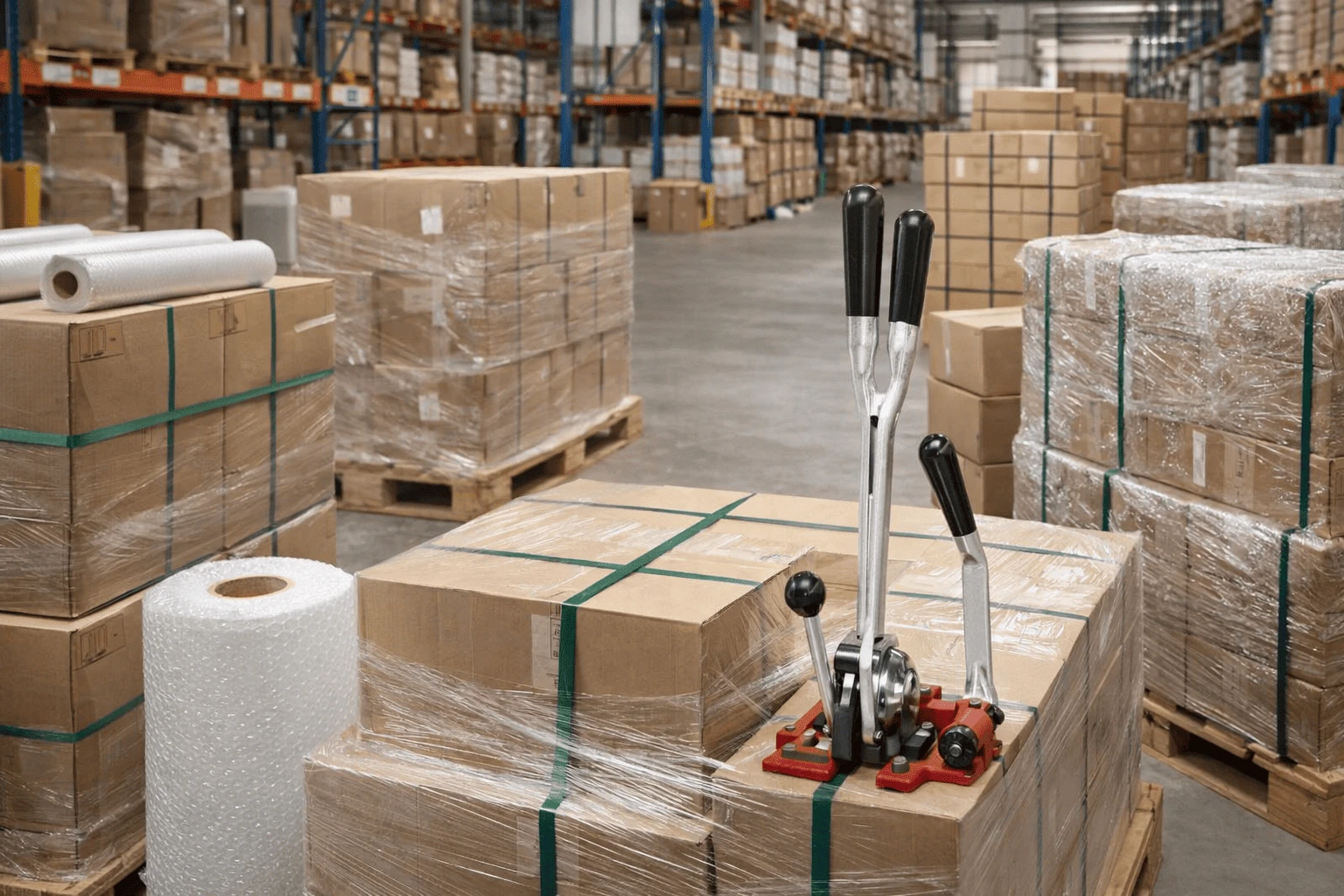
An effective packaging strategy relies on cushioning, containment, reinforcement, and moisture management. Packaging Supplies serve as essential materials and solutions that help protect industrial items and maintain stability during storage and transit.
Bubble wrap remains one of the most effective cushioning materials for protecting industrial accessories from surface damage. Its air-filled structure absorbs impact energy during handling and transport, helping to prevent scratches, dents, and minor breakages. It works particularly well as an inner protective layer for components with finished or delicate surfaces.
Pallet wrap plays a key role in load containment. Black pallet wrap helps bind items together securely, reducing movement during transport and forklift handling. Its opaque finish also limits visibility, which can be beneficial when storing or transporting high-value industrial accessories.
Strapping is essential for maintaining pallet integrity, especially when loads are heavy or stacked. Polypropylene strapping provides a balance of strength and flexibility, keeping cartons and bundled items firmly in place without excessive rigidity.
Consistent strapping tension is difficult to achieve manually. A combination bundling and banding tool allows operators to tension, seal, and cut strapping efficiently, improving uniformity across shipments and reducing the likelihood of loose or unevenly secured loads.
Double-wall cartons offer increased resistance to compression and stacking pressure. Their reinforced construction makes them suitable for heavier industrial accessories that require structural support during storage and long-distance shipping.
Corners are often the first point of impact during handling. Foam corner protectors help absorb shocks at vulnerable edges, maintaining product shape and reducing the risk of deformation or cosmetic damage.
Moisture and condensation can be problematic during long-term storage or transport. Acid free tissue paper provides a breathable inner layer that helps manage moisture build-up while preventing surface marking, making it suitable for sensitive industrial components.
Selecting effective packaging requires understanding both the product and the conditions it will encounter throughout its lifecycle.
Heavier items require packaging that can withstand stacking forces and movement, while lighter or fragile accessories benefit from enhanced cushioning. Products with sharp edges, protrusions, or uneven shapes may need additional protection to prevent pressure points and abrasion.
Assessing these characteristics early ensures packaging materials are neither under-specified nor excessive.
Packaging needs often differ depending on whether products are being stored, shipped, or both. Storage-focused packaging prioritises protection from dust and moisture, while shipping-focused packaging must also account for vibration, impact, and frequent handling.
Understanding this distinction allows businesses to select solutions that remain effective across all stages of distribution.
For industrial operations, consistency is key. Using the same packaging materials across shipments improves handling efficiency and reduces variability. Bulk purchasing also supports continuity of supply and helps maintain established packaging standards across teams and locations.
Even the best materials must be used correctly to deliver their intended benefits.
Layered packaging—combining cushioning, containment, and reinforcement—provides multi-level protection. Inner layers protect surfaces, while outer layers stabilise loads and resist external pressure. This approach is particularly effective for long or complex distribution routes.
Movement within packaging is a major cause of damage. Ensuring loads are evenly distributed, tightly packed, and properly secured helps maintain stability and reduces wear caused by friction or shifting during transit.
Clear labelling, consistent load configuration, and staff awareness all contribute to better handling outcomes. Training teams to recognise proper packaging standards helps prevent avoidable damage and supports safer operations overall.
Effective packaging is foundational to reliable industrial operations. By protecting products from impact, movement, moisture, and environmental exposure, the right packaging strategy preserves product quality, supports safer handling, and reduces operational disruption.
For industrial accessories, thoughtful packaging is not about excess—it is about alignment. Matching materials to product characteristics and logistical demands leads to fewer losses, greater consistency, and improved confidence throughout the supply chain.
As industrial environments continue to prioritise efficiency and resilience, packaging remains a practical tool for managing risk and maintaining operational standards. Businesses that invest time in understanding their packaging needs are better positioned to protect their products and streamline operations over the long term. For those reviewing or refining their approach to industrial packaging, guidance and reference materials are available at industrialmaterial.uk, offering insights aligned with real-world storage and shipping practices.

I am Oliver, a blog writer who enjoys creating clear, engaging, and meaningful content for readers. I like exploring different topics and turning ideas into simple, easy-to-understand articles that provide real value. My focus is on writing in a natural and creative way so readers can stay interested and connected. Through my blogs, I aim to inform, inspire, and share useful insights with my audience.
The industrial diesel engine is commonly found in construction equipment, generators, agricultural e
18 August 2026
Workplace safety has come a long way over the past few decades, and one area that has seen major imp
18 August 2026
When you walk into any major concert event today, the first thing that hits you is the visuals. You
11 August 2026
Be the first to share your thoughts
No comments yet. Be the first to comment!
Share your thoughts and join the discussion below.
.webp&w=3840&q=75)








.webp&w=3840&q=75)
.webp&w=3840&q=75)