
* All product/brand names, logos, and trademarks are property of their respective owners.
Oil spills in industrial workplaces don’t just damage the environment — they disrupt operations, harm worker safety, and can result in costly cleanup and downtime. While many people immediately think of large tanker accidents or offshore disasters, oil leaks happen every day inside factories, plants, warehouses, and on shop floors.
Behind most of these spills are material‑related issues: materials that degrade, react poorly with oil, fail under stress, or aren’t supported by the right containment solutions. Understanding these causes — and knowing what industrial products can mitigate them — helps facilities cut risk and build stronger safety systems.
Industrial infrastructure is only as strong as the materials used in it. Pipes, storage tanks, valves, and seals all rely on components that can withstand the chemicals and conditions they face.
One of the most common causes of oil spills in industrial facilities is metal corrosion or fatigue. Steel or iron components can rust over time, especially when exposed to moisture and oil. Once cracks form, oil can leak through even tiny openings, leading to slip hazards and fluid loss.
Metals exposed to heavy loads, vibration, and repeated heat cycles also develop stress fractures, weakening seams and joints.
Using high‑grade, corrosion‑resistant materials and regular inspections can dramatically reduce this risk.
Seals and gaskets are often made from rubber or softer polymers that degrade when they contact oil, fuel, or heat. If these components fail, connections between pipes and tanks can leak.
Replace old seals with oil‑resistant compounds and ensure compatibility with the specific oil types used in your plant.
Even with strong materials, human and mechanical actions can trigger spills — especially when moving oil between tanks, machinery, or transport vessels.
When hoses aren’t properly connected or fittings don’t match the equipment precisely, oil can escape during fills or transfers. These spills may be small at first, but they quickly spread on floors, creating slippery conditions or entering drains if not contained.
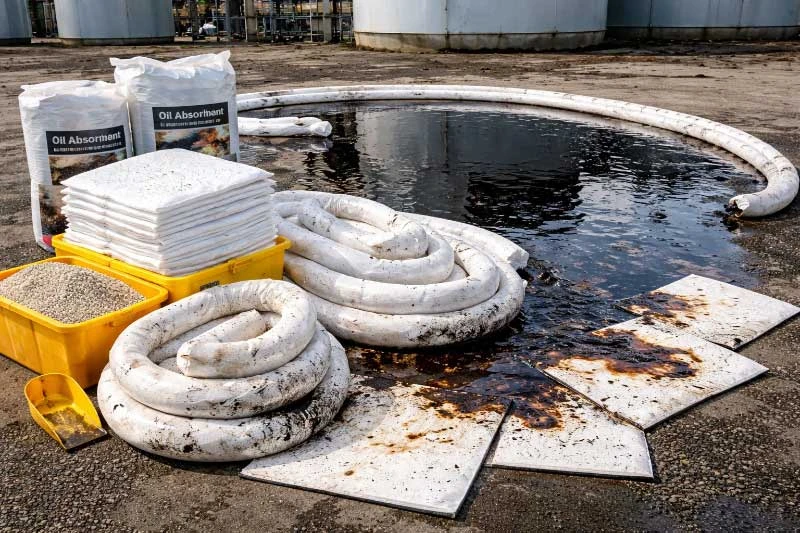
One practical way to address this is by keeping ready‑to‑use spill control products in high‑risk areas of the plant. For example, having an oil spill kit easily accessible means workers can start containment immediately — absorbing and stopping the spread before it becomes a bigger issue. Quality kits include pads, socks, and absorbent granules designed specifically to soak up hydrocarbons.
Material selection isn’t only about equipment — it includes what’s installed to contain a spill when things go wrong.
Smooth concrete floors commonly found in factories are perfect for spreading spilt oil. Without mats, liners, or absorbent pads — materials often overlooked in plant safety — oil quickly creeps farther than expected.
Products like site mats, liners, and absorbent pads act as barriers and cleanup tools. These materials stop oil from reaching drainage systems, protect floors, and give maintenance teams a head start on cleanup.
Especially around storage tanks and drums, secondary containment is essential. This means having bunds, trays, or pallets that catch leaks before they reach the environment.
Strong spill containment materials — such as bunded tray liners or absorbent granules — help catch small leaks and prevent them from escalating into larger hazards.
If you want ready containment tools designed for industrial use, visiting the oil spill solutions section at M Industrial Safety provides a range of materials from pads and granules to booms and liners that suit different sizes of spills.
Industrial sites are not always controlled environments. Temperature swings, humidity, chemical exposure, and even UV light can degrade materials over time.
Pipes and storage systems can expand and contract with heat. If the material isn’t suitable for these cycles, stress cracks form, creating potential leak points.
Choosing materials that retain strength under fluctuating temperatures — and regularly checking them — reduces oil loss.
Oil isn’t the only fluid in many plants. Coolants, solvents, cleaners, and other chemicals interact with materials. Some plastics or rubbers break down more quickly than expected when exposed to these combined chemicals.
Industrial materials selection must account for multi‑chemical exposure, rather than just oil alone. Products designed explicitly for oil spill control — like oil‑specific absorbent pads and rolls — repel water and absorb hydrocarbons efficiently, making them ideal for many industrial environments.
Regular operation causes wear that eventually results in equipment failure or small leaks.
Machinery that vibrates often loosens fittings or breaks down seals over time. Even floors under heavy equipment can crack, creating channels that help spills spread faster.
Routine monitoring — and using durable industrial materials such as reinforced hoses and vibration‑resistant fittings — goes a long way.
Old equipment with outdated materials often fails unexpectedly. Instead of waiting for a spill, creating a maintenance schedule that includes checking seals, oil lines, and containment equipment helps spot weak materials early.
Understanding the causes is only half the battle. The other half is adopting the right materials and products that prevent small leaks from becoming major incidents.
Here are practical options:
Well‑stocked kits include pads, socks, granules, and disposal materials. They are designed to respond quickly to spills and make cleanup safer and more efficient — especially when stocked near high‑risk areas.
Consider including an oil spill kit from trusted suppliers like the Oil Spill collection by M Industrial Safety for your facility.
For larger volume leaks, booms and physical barriers contain the flow until it can be absorbed or pumped.
These materials are placed under machinery, around pumps, or near spill points to catch drips before they spread.
These help prevent oil from touching the main floor or entering drainage systems — providing both safety and compliance benefits.
Oil spills in industrial settings often trace back to material issues — from degraded seals to missing containment barriers. Understanding these causes helps plant managers and safety officers choose the right materials and products that stop spills before they become costly hazards.
By using purpose‑built spill kits, absorbents, mats, and barriers, and keeping them accessible, you can shorten response times, protect workers, and maintain clean, safe operations.
Remember: proactive material choices and a solid spill response plan are far cheaper — and safer — than cleaning up after a preventable leak.

M Industrial Safety UK supplies reliable, high-quality safety and industrial products for workplaces across the UK. From PPE and safety footwear to site and industrial equipment, we provide compliant solutions designed to protect people and support professional environments. With a focus on quality, reliability, and customer service, we help businesses stay safe, efficient, and compliant — every day.
The industrial diesel engine is commonly found in construction equipment, generators, agricultural e
18 August 2026
Workplace safety has come a long way over the past few decades, and one area that has seen major imp
18 August 2026
When you walk into any major concert event today, the first thing that hits you is the visuals. You
11 August 2026
Be the first to share your thoughts
No comments yet. Be the first to comment!
Share your thoughts and join the discussion below.
.webp&w=3840&q=75)








.webp&w=3840&q=75)
.webp&w=3840&q=75)